
Reviewed · WALKING TOURS
Palma de Mallorca Must-See Attractions Walking Tour With A Guide
Palma gets more interesting when you walk it. This 2-hour Palma Old Town walking tour strings together the key sights with a friendly English-speaking guide and a pace that feels doable, even if you only have a morning or a couple hours. I like the small-group feel (private or small group options) and how the guide can tailor the focus to your interests. One thing to consider: it’s a city tour, not an inside-the-monuments tour, so if you’re hoping for heavy museum time, you’ll need separate entries.
You’ll start in the center and move through the old quarter step by step, with stops that mix architecture, religion, and Moorish-era traces. I also like the practical touch: the tour includes help booking tickets if you decide you want to go into specific places, and some guides will give real directions for getting back to wherever you’re staying. The only drawback is pace: with many stops packed into about 2 hours, you’ll see plenty, but you won’t linger for long at each site.
If you want the best value for the money, this is a solid pick because you’re paying for interpretation and route guidance, not for a long list of paid admissions. And with a strong rating (4.6 out of 5) and lots of travelers recommending it, it’s clearly hitting the sweet spot for what most people need in Palma.
In This Review
- Key highlights you’ll care about
- Why This Palma Old Town Walk Is a Great Use of Time
- Starting at Passeig des Born: Quick Orientation From the First Step
- Carrer de Sant Agustí and Placa de Cort: Where Old Town Starts Making Sense
- Santa Clara and the Convent Atmosphere: Quiet Stops Within a Busy City
- Baños Árabes: Moorish-Era Details You Can Actually See
- La Lonja Area and the Gothic-Slant of Trade
- Santa Eulàlia and Sant Francesc: Two Church Visits, Two Different Moods
- Ca’n Joan de s’Aigo: The Food Stop Is Optional, Which I Like
- Cala Major Beach Walk: A Simple Change of Pace
- Palau de l’Almudaina and Parc de la Mar: Royal Power Meets Sea Views
- Placa de La Seu: Finishing With Energy (and a Last Local Tip)
- Price and Logistics: What You’re Actually Paying For
- Who This Tour Is Best For (and Who Might Want Something Else)
- Should You Book This Palma Walking Tour?
- FAQ
- How long is the Palma de Mallorca walking tour?
- What is the price per person?
- Is this tour private or can it be a small group?
- What languages are available for the guide?
- Is monument entry included?
- Does the tour include food or drinks?
- Where does the tour start and where does it end?
- Do I need public transportation during the tour?
- Can I cancel for a full refund?
Key highlights you’ll care about
- A well-structured 2-hour loop through Old Town, plus a coast stop near Cala Major
- Arab Baths (Baños Árabes) as a standout Moorish-influenced stop with lots to notice from street level
- Gothic stops that matter, including Sant Francesc and Santa Eulàlia, with clear orientation on what you’re looking at
- Palau de l’Almudaina and Parc de la Mar views, tying royal power to sea-and-city scenery
- Tour guides like Romina (Romi), Mimi, and Christina who stay friendly, ask questions, and adjust the walk to your pace
- No food or monument admissions included, so you control what you buy and what you enter
Why This Palma Old Town Walk Is a Great Use of Time
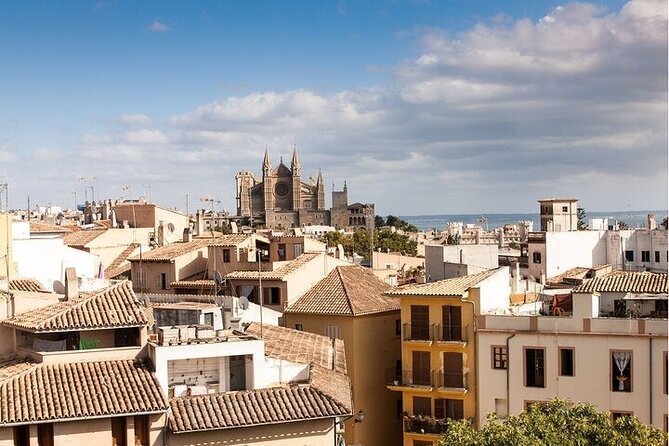
Palma de Mallorca isn’t just pretty buildings. It’s a city where centuries overlap, and the fastest way to understand that is to walk the core and get someone to point out what you might otherwise miss. This tour is built for exactly that: a short, focused route that helps you learn the layout of Old Town without getting stuck in information overload.
At about 2 hours, it’s long enough to feel like you got your bearings and short enough to work with real vacation schedules. The typical cost is $37.71 per person, which is less about “paying to enter places” and more about paying for the guide’s street-smart context. If you enjoy history explanations tied to what you can actually see outside, this kind of tour is a smart value.
The pacing is brisk but not frantic. Each stop is timed like a montage—enough time to look, listen, and take a few photos—then you move on. That matters because Palma’s Old Town is full of small lanes, and if you linger too long in one spot, you’ll run out of time to connect the story across multiple sites.
Palma on foot, more routes

Starting at Passeig des Born: Quick Orientation From the First Step
The tour begins at Passeig des Born, 4 in the city center. That’s a convenient place to start because it sits in the heart of Palma and is near public transportation, which helps if you’re arriving from a hotel, cruise area, or another part of the island.
From the start, you’ll get the kind of orientation that makes the rest of the city easier. The guide frames what you’re about to see—old streets, major squares, and the “why” behind key architecture—so you don’t feel like you’re just collecting landmarks.
You’ll also finish back at the meeting point area. That round-trip format is useful because it reduces the mental load at the end of a walk—especially if you’re trying to connect back to a ship, dinner plan, or a later activity.
Carrer de Sant Agustí and Placa de Cort: Where Old Town Starts Making Sense
Your first stop is Carrer de Sant Agustí, 7, in the Old Town. This area is all narrow lanes and old façades, and the guide uses that first stretch to set the tone: Palma’s identity is built from layers—religion, trade, and Moorish influence in the broader island story.
Then you move to Placa de Cort, which is one of those squares that functions like Palma’s living room. You’ll notice the architecture around it and, importantly, you’ll get a point of view on symbolism—there’s an olive tree tied to Mallorcan tradition and peace. Even if you’ve seen squares in other Spanish cities, this one feels distinct because of how it connects daily life with older civic identity.
These early stops are a good “mental warm-up.” They help you understand the walking rhythm: look up at façades, then look outward to squares where landmarks anchor your sense of direction.
Santa Clara and the Convent Atmosphere: Quiet Stops Within a Busy City
Next comes Convent de Santa Clara—a peaceful contrast to the street energy. Convent spaces are often designed so they feel separate from the noise. Here, the guide’s job is to explain why that separation mattered historically, and how convent life shaped Palma’s religious and social landscape over the centuries.
The itinerary brings you close again with Monestir De Santa Clara later, which is a nice trick for getting different angles and impressions without turning this into a long, repetitive detour. If you’re the type who likes to understand how places feel in real time—how light changes, how sounds shift—this is one of the parts that tends to land well.
One practical consideration: since this is a walking tour of the city rather than a deep interior tour, you may not get a long time inside. If entering buildings is a top priority for you, you’ll need to plan for separate admissions.
Easier days with a local guide
- Palma de Mallorca: Guided Tour of the Old Town★ 4.9 · 822 reviews
- Palma: Caves of Genova Ticket & Digital Audio Guide★ 3.9 · 820 reviews
- Palma de Mallorca Old Town Guided Bike Tour (Small Groups)★ 4.6 · 563 reviews
- Cala Varques: Guided Sea Caves Kayak & Snorkeling Expedition★ 4.8 · 534 reviews
- Cala Millor/Sa Coma: Guided Buggy Tour★ 4.7 · 348 reviews
Baños Árabes: Moorish-Era Details You Can Actually See

Banys Arabs (Baños Árabes) is where the tour’s historical texture gets extra interesting. The Arab Baths are a strong reminder that Mallorca didn’t develop in isolation. A lot of the island’s built heritage carries Moorish-era influence, and this is one of the most tangible places to notice that.
Even if you’re mostly viewing from outside or around the immediate area, the guide can point out the kinds of details that make these baths different from later Christian-era architecture. The standout part here is the “try to imagine it” effect: once someone explains the purpose of the space and its timeframe (the baths date back to the 10th century), you start seeing the building as a functioning system, not just a pretty wall.
This stop is also great if you want a break from the purely religious architecture focus. It’s still tied to faith and society indirectly, but it’s also about daily life, hygiene, and the science of water and cooling—things that feel human, not abstract.
La Lonja Area and the Gothic-Slant of Trade
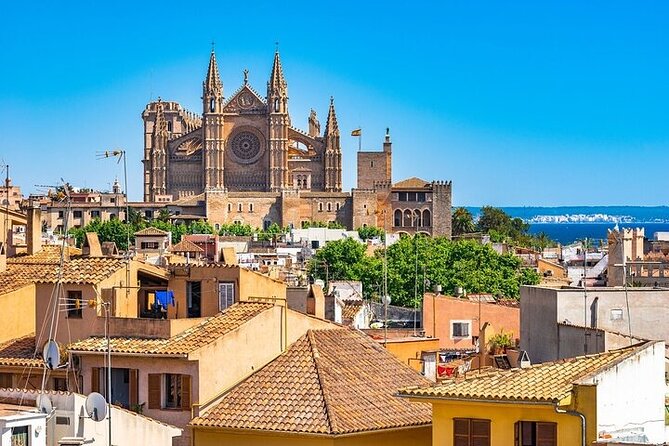
Your route includes a stop at La Bodeguita del Medio de La Lonja, connected to Guillem Sagrera, a well-known artist and architect. Even if you don’t enter anything, this is a worthwhile architectural pause because La Lonja ties the city’s story to commerce and to the kind of civic ambition you could see through design.
The tour’s way of handling this is smart: it doesn’t ask you to become an expert in one building. Instead, it points you toward the “what to look for” elements so when you see similar styles later, you can recognize the thread.
If you’re interested in how cities grow—where wealth shows up in stone—this part is a helpful bridge between the religious stops and the royal power later.
Santa Eulàlia and Sant Francesc: Two Church Visits, Two Different Moods
Next you’ll visit Plaça de Santa Eulàlia and then Reial Covent De Sant Francesc, both major religious landmarks.
At Santa Eulàlia, the key focus is the Gothic facade—the exterior details are the star here. You’ll get enough time to look closely and understand what makes the design distinctive, then step inside if the area allows. In practice, even a short indoor moment can do a lot: carvings, religious artworks, and the feel of space all add context quickly.
Then comes Basilica de Sant Francesc, which the tour frames as a major Gothic masterpiece. This is a big one. The guide will explain the significance of the basilica and talk about historical religious relics and artifacts in a way that helps you connect the architecture to what people once believed and valued.
Since the tour is not meant to be a deep interior slog, the pacing here matters. You’ll likely come away with a clear sense of the vibe and the design rather than a line-by-line architectural manual. That’s exactly what makes this tour workable for a short time window.
Ca’n Joan de s’Aigo: The Food Stop Is Optional, Which I Like
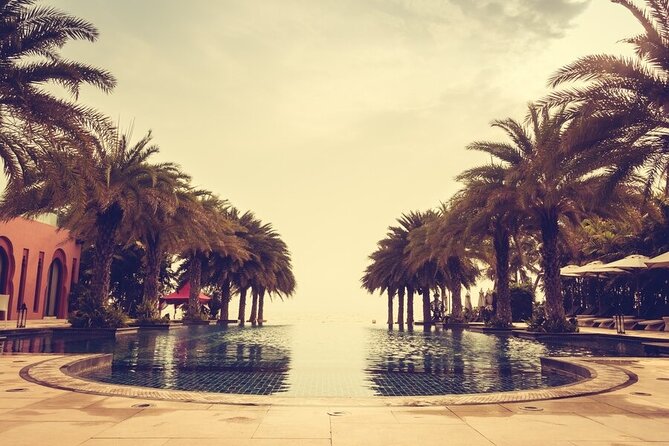
At Ca’n Joan de s’Aigo, you get a taste of Mallorcan food culture. The stop is tied to traditional pastries and sweets, and it’s often a welcome moment in the walk because it gives you a breather.
But here’s the honest part: drinks and food are not included. So think of this as a chance to buy something you actually want, not a guaranteed meal. If you want a quick pastry and coffee to recharge, this is your moment. If you’d rather keep it light, you can just enjoy the stop and move on.
This is also a good stop for people who want authenticity without doing a full sit-down lunch. You’re still in the center of Palma, but you’re not just looking at stone—you’re experiencing a local habit.
Cala Major Beach Walk: A Simple Change of Pace
After the old quarter, the tour heads toward Playa de Cala Mayor for a golden-sand coastal stroll. This isn’t a full beach day, but it’s the perfect reset. You get sea air, open views, and a chance to walk without craning your neck at buildings.
If you’re on a cruise or you’re doing a packed schedule, this small beach interlude is valuable. It turns the tour from “more monuments” into “Palma feels good outside too.”
One consideration: the time here is short. If you want to swim or spend serious time on the sand, you’ll need to plan that separately. Still, as a mood shift, it does its job.
Palau de l’Almudaina and Parc de la Mar: Royal Power Meets Sea Views
Two of the best “how Palma hangs together” stops come late in the route.
First is Palau de l’Almudaina, the medieval palace that once served as a royal residence. This stop helps you understand the arc of the city: from everyday religious life and commerce, you arrive at a place tied to political authority. The guide helps you read the spaces—courtyards and hall areas you notice from your position—even if you don’t spend hours deep inside.
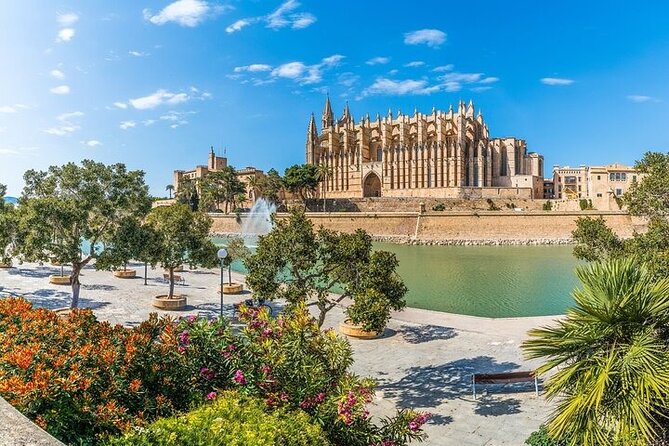
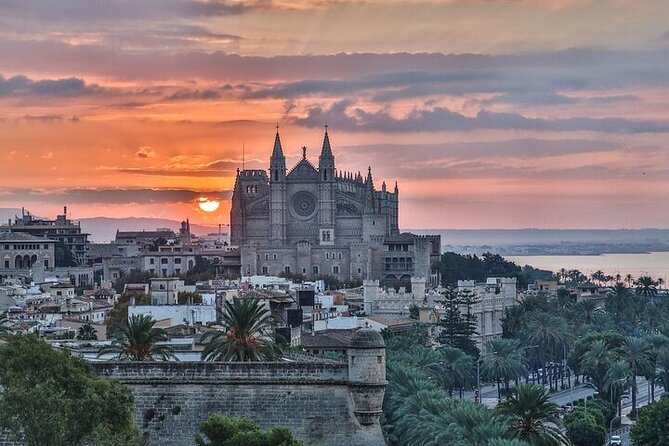
Then comes Parc de la Mar, a park area between the city and the sea. The real payoff is the combination of easy walking paths and panoramic views that include the Cathedral of Santa Maria in the wider scene. This is where the tour turns scenic, and you don’t need to keep track of dates and names to enjoy it.
If you like photos, bring your camera here. If you don’t, you’ll still appreciate the break. After a string of architecture stops, this park moment gives your brain somewhere to rest.
Placa de La Seu: Finishing With Energy (and a Last Local Tip)
The tour ends at Placa de la Seu, a lively square near the cathedral area. It’s a strong finish because it’s central and easy to extend your evening from. You can grab a refreshing drink on your own and decide what you want next.
One reason this ending works is practical: it puts you near more dining options and near the main “hub” area. If you’re coming from a cruise, guides have also been known to offer helpful direction on how to get back to port and even how to use local buses for connecting to the beach later.
Price and Logistics: What You’re Actually Paying For
Let’s talk value, because the price is reasonable, but you should know what it buys.
You’re paying $37.71 per person for a guided walking route that covers major sights around Palma’s core. The time investment is about 2 hours, and the tour is offered in English (plus other guide languages are available, including Spanish, French, and Italian). You’ll also get a mobile ticket.
What’s not included matters:
- Entry to monuments and museums is not included. The tour is a city tour, so expect mostly street-level viewing and short orientation moments.
- Food and drinks are not included. The café/pastry stop is there to give you an optional taste of local life.
- Transportation isn’t covered. It’s a walking tour, so you’ll be on foot for most of it.
To me, the value comes from the guide doing the “translation” part. Without that, you can still see the sights, sure. But with a guide, you understand why Arab baths, convents, and royal architecture all sit in the same city and what they tell you about Palma’s development.
Also, since the tour can be private or small group, you’re not stuck with a huge crowd. You can ask questions and keep a more comfortable pace, which matters on a short schedule.
Who This Tour Is Best For (and Who Might Want Something Else)
This tour is a good fit if you:
- want a clear overview of Palma in a short time
- enjoy architecture and city layout, not long museum sessions
- like getting a guide who can adjust to your interests
It’s especially useful if you’re doing a shore excursion. The route is compact, and the guide can help you map out what to do after you’re back in the center.
If you’re the type who wants hours inside churches, palaces, and museums, you might find this tour too “exterior focused.” The tour itself is set up to avoid a long, ticket-heavy day. The good news is you can still buy that extra time separately afterward if you want.
Should You Book This Palma Walking Tour?
I’d book it if your goal is to get oriented fast and see a meaningful slice of Palma without turning your vacation into a checklist marathon. The route hits the big emotional and architectural beats: Moorish-era influence at the Arab Baths, major Gothic stops at Sant Francesc and Santa Eulàlia, royal and sea views at Palau de l’Almudaina and Parc de la Mar, plus a breather at Cala Major.
Book it now if you can, too. On average, this tour is reserved about 44 days in advance, which usually means it fills during the busy travel windows. And with the strong recommendation rate and guide performance (friendly, adaptable, and clearly good at explaining), it’s the kind of short experience that tends to pay off.
If you do have a lot of interest in going inside monuments, treat this as your “foundation walk,” then add entries afterward on your own. That way you get both speed and depth.
FAQ
How long is the Palma de Mallorca walking tour?
The tour is about 2 hours.
What is the price per person?
The listed price is $37.71 per person.
Is this tour private or can it be a small group?
It offers private or small group options. For the private tour/activity, only your group participates. The group option requires a minimum of 2 participants.
What languages are available for the guide?
The guide is available in English, Spanish, French, and Italian.
Is monument entry included?
No. This is a city tour and not a tour inside the monuments. Entry to monuments and museums is not included.
Does the tour include food or drinks?
No. Drinks and food are not included, even though there is a stop at Ca’n Joan de s’Aigo.
Where does the tour start and where does it end?
It starts at Passeig des Born, 4, Centre, 07012 Palma, Illes Balears, Spain, and it ends back at the meeting point.
Do I need public transportation during the tour?
It’s a walking tour, but transportation is not included. If you choose to use public transport during the day, the cost is on you.
Can I cancel for a full refund?
Yes. You can cancel up to 24 hours in advance for a full refund. Cancellation less than 24 hours before the start time isn’t refunded.
If you want, tell me your travel dates and whether you’re coming from a cruise. I can suggest a simple way to pair this walk with the next thing you’ll want to do in Palma.
Palma on Foot, Continued
- Palma de Mallorca: City Walking Tour with The Cathedral
★ 4.0 · 657 reviews - Palma de Mallorca: Foodie Walking Tour of the Old Town
★ 4.6 · 372 reviews - Private walking tour in Palma de Mallorca with local guides.
★ 5.0 · 182 reviews - Palma, Cathedral & Valldemossa: Guided walking Tour
★ 4.1 · 182 reviews - Palma de Mallorca: Walking Tour, Cathedral & Local Tasting
★ 4.9 · 115 reviews - 2-Hour Private Walking Tour Through Palma’s Jewish Quarter
★ 5.0 · 66 reviews
More Mallorca Tours to Compare
- Palma de Mallorca: City Sightseeing Hop-On Hop-Off Bus Tour
★ 4.1 · 4,450 reviews - Mallorca: Island Tour with Boat, Tram & Train from the South
★ 4.4 · 3,888 reviews - Palma de Mallorca: Half-Day Catamaran Tour with Buffet Meal
★ 4.5 · 3,190 reviews - Palma de Mallorca: Sunset Boat Tour
★ 4.6 · 2,894 reviews - Mallorca: ATV /Quad Bike Tour
★ 4.8 · 2,712 reviews - Mallorca: Palma Boat Tour & Snorkeling with Drink Included
★ 4.4 · 2,444 reviews
More Mallorca Trips, Reviewed
- Palma: Cathedral of Mallorca Skip-the-Line Entry Ticket
★ 4.6 · 14,386 reviews - Palma de Mallorca: 5-Hour Catamaran Cruise with Lunch & Swim
★ 4.5 · 9,957 reviews - Porto Cristo: Caves of Hams Entry Ticket
★ 4.2 · 6,548 reviews - Palma de Mallorca: City Sightseeing Hop-On Hop-Off Bus Tour
★ 4.1 · 4,450 reviews - Mallorca: Island Tour with Boat, Tram & Train from the South
★ 4.4 · 3,888 reviews - Palma de Mallorca: Half-Day Catamaran Tour with Buffet Meal
★ 4.5 · 3,190 reviews
Just Reviewed: Fresh Mallorca Trips

Walking Tours, compared.
 ★ 4.0City Walking Tour with The CathedralFrom $34657 reviews
 ★ 4.6Foodie Walking Tour of the Old TownFrom $77372 reviews
 ★ 5.0Private walking tour in Palma de Mallorca with local guides.From $266182 reviews
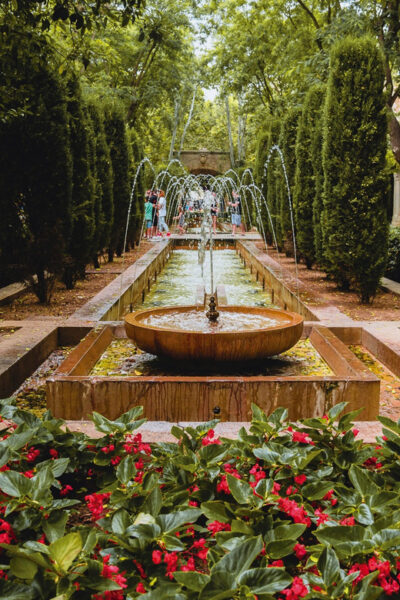 ★ 4.1Palma, Cathedral & Valldemossa: Guided walking TourFrom $40182 reviews
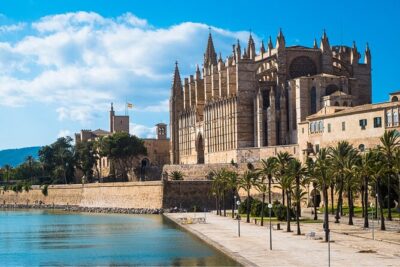 ★ 4.9Walking Tour, Cathedral & Local TastingFrom $46115 reviews
 ★ 4.5Food Tasting Walking Tour in Palma with a LocalFrom $78105 reviews
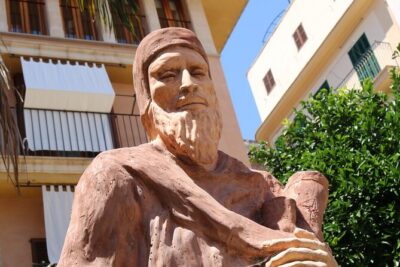 ★ 5.02-Hour Private Walking Tour Through Palma’s Jewish QuarterFrom $12066 reviews
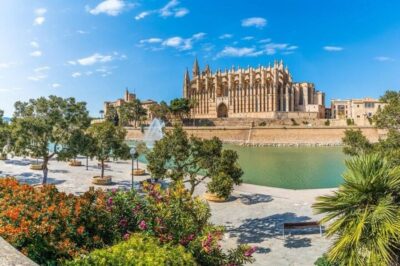 ★ 4.6Must see Walking Tour With A GuideFrom $3962 reviews
Browse the lists this tour appears in