
Reviewed · WALKING TOURS
Palma de Mallorca : Must see Walking Tour With A Guide
Palma feels small after a good walk. In 2 hours, this private guided tour by Guydeez Tours shows you Palma Old Town’s key landmarks—like the Arab Baths—and then adjusts the route to what you care about. I like that you’re not forced through a one-size-fits-all checklist.
Two things I really like: the guide’s ability to connect architecture to everyday life, and the way they tailor the story to your interests. In my experience of this style of tour, that’s exactly what Frank and Jorge are praised for—Jorge even leaned into history and architecture and added a stop at the Roman baths area, where the gardens feel calm and tucked away.
One drawback to consider: it’s a tight time window, so you won’t see every single site. Also, some stops may involve extra entry costs—one example is the Roman baths add-on fee mentioned by a guide—so it’s smart to expect that not every door is included in the base price.
In This Review
- Key things I’d pay attention to
- Palma’s Old Town: Why This Works in 2 Hours
- Starting at Pg. del Born: Getting Oriented Without Wasting Time
- Plaça de Cort: The Square That Gives You Palma’s Center of Gravity
- Santa Clara Convent Area: A Quiet Pause in the Middle of the City
- Arab Baths: When Stone Explains an Older Palma
- La Bodeguita del Medio de La Lonja and Guillem Sagrera’s Design
- Plaça de Santa Eulàlia and Sant Francesc: Squares and Faith Side by Side
- Ca’n Joan de s’Aigo: The Kind of Stop You’ll Remember Later
- Palau de l’Almudaina and Parc de la Mar: Power Meets Sea Air
- What You’ll Learn From the Guide (Beyond the Sights)
- Price and Value: Is $39 a Good Deal?
- Practical Tips for Getting the Most From Your Walk
- Languages, Pace, and Accessibility
- Should You Book This Palma Tour?
- FAQ
- How long is the walking tour in Palma de Mallorca?
- How much does the tour cost?
- Where does the tour start?
- Is this tour private?
- What languages are available for the live guide?
- What’s included, and is food included?
Key things I’d pay attention to
- Private and exclusive: it’s just your group, so questions and pace are yours
- Tailored route: guides adjust based on what you want (history, architecture, or both)
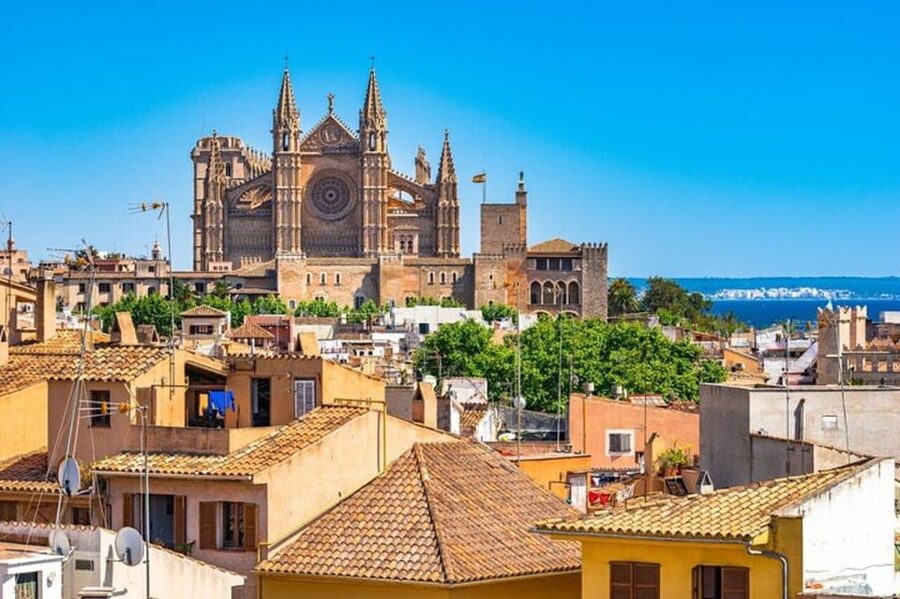
- Top Palma anchors: Plaça de Cort, Santa Clara, Arab Baths, and Palau de l’Almudaina
- Real local detail: craft and cultural clues like the Mallorcan fabric motif and espadrilles
- Efficient logistics: walking plus public transport helps cover more in 2 hours
- Guide-led “what next” planning: you’ll get practical advice for the rest of your day
Palma’s Old Town: Why This Works in 2 Hours
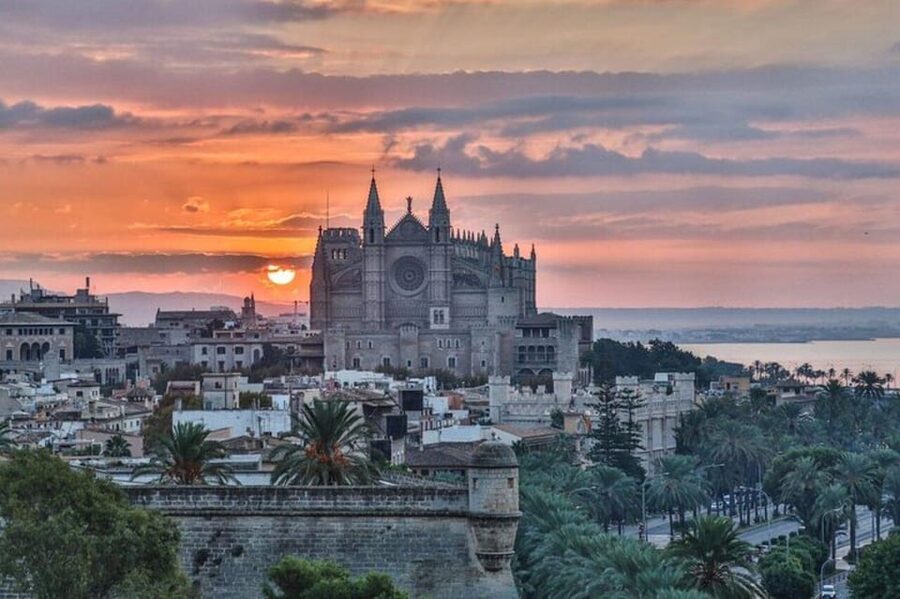
Palma looks easy on a map, then surprises you with how much there is packed into the center. That’s why a timed, guided walk is such a smart move—especially if you only have a day or two on the island.
The big value here is focus. You’re not wandering randomly. You’re being walked through a sequence of places that explain how Palma went from Moorish-era influence (that’s where the Arab baths come in) to medieval Christian power, and then into the city’s modern identity along the waterfront.
This tour also runs as a private experience. That matters more than people think. You can ask follow-up questions, slow down when something catches your eye, and still keep the whole plan moving within the 2-hour window.
Palma on foot, more routes

Starting at Pg. del Born: Getting Oriented Without Wasting Time
You meet at Pg. del Born, 4, which is a convenient jump-off point for the older parts of town. From there, the guide brings you into the rhythm of Palma—tight streets, open squares, and sudden changes in scenery as you move between civic buildings and religious spaces.
I like that your guide isn’t just naming sights. You get context for what you’re looking at. It’s the difference between seeing stone and understanding why it’s there and what it once meant to the people who built and used it.
Expect a walk that balances quick movement with moments where the guide points out specific details—things you’ll miss if you’re just snapping photos and walking on.
Plaça de Cort: The Square That Gives You Palma’s Center of Gravity
Plaça de Cort is one of those places that feels like the heart of Palma for a reason. It’s the kind of civic square where you can sense the city’s decisions and daily life without needing a museum ticket.
On this stop, you’re likely to get a sense of how Palma’s institutions developed around public space—where people gather, where power shows itself, and how the buildings around you shape the feel of the square. It’s not just sightseeing; it’s learning how to read the city.
The practical upside: once you understand the role of a square like Plaça de Cort, the rest of the walk clicks into place faster. You’ll start predicting what each next stop is likely to represent.
Santa Clara Convent Area: A Quiet Pause in the Middle of the City
Santa Clara is a different mood from the street bustle you might expect in central Palma. The convent stop gives you a chance to slow down and notice how religious architecture creates space—visually and emotionally.
What I like about this kind of stop on a short tour is the contrast. After civic squares and busy streets, you get something calmer. That’s also why returning near the convent area can feel natural—if your route loops back, it often works as a reset for your brain.
If you care about atmosphere as much as facts, this is the part where you’ll probably feel the most grounded.
Easier days with a local guide
- Palma de Mallorca: Guided Tour of the Old Town★ 4.9 · 822 reviews
- Palma: Caves of Genova Ticket & Digital Audio Guide★ 3.9 · 820 reviews
- Palma de Mallorca Old Town Guided Bike Tour (Small Groups)★ 4.6 · 563 reviews
- Cala Varques: Guided Sea Caves Kayak & Snorkeling Expedition★ 4.8 · 534 reviews
- Cala Millor/Sa Coma: Guided Buggy Tour★ 4.7 · 348 reviews
Arab Baths: When Stone Explains an Older Palma
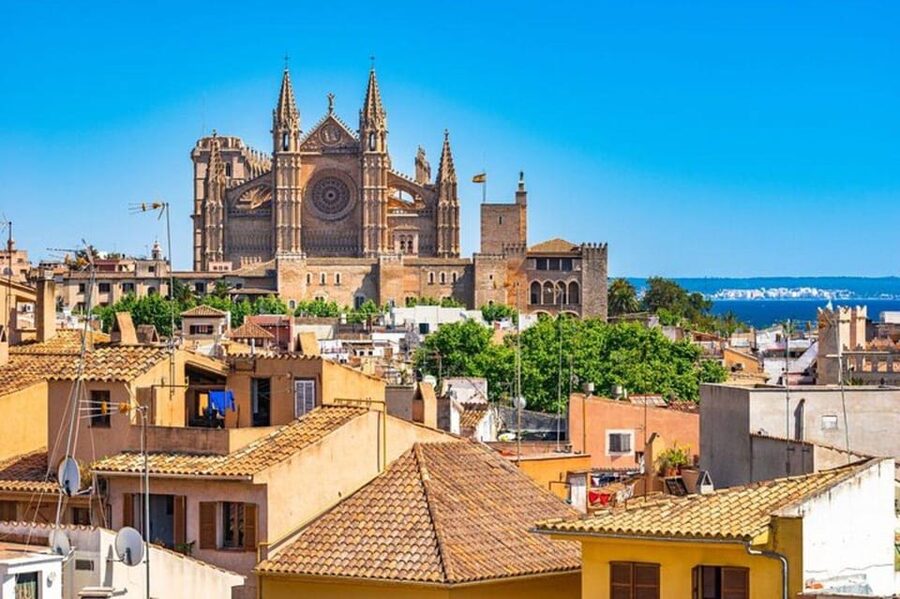
The highlight for many people is the Arab Baths stop, and for good reason. It’s a symbol of Mallorca’s layered past, and it’s the kind of sight that makes you understand that Palma wasn’t always built by the same cultures or under the same rules.
Here, the guide’s job is key: they translate what you’re seeing into meaning. You’re not just looking at remnants—you’re learning what made these spaces functional and how design supports daily life. That turns ruins into a story you can actually follow.
One word of advice: wear comfortable shoes and keep your eyes up. The guide will point out details that won’t register if you’re only watching your feet.
La Bodeguita del Medio de La Lonja and Guillem Sagrera’s Design
One of the coolest moments in the tour is the stop at La Bodeguita del Medio de La Lonja, connected to the architectural work of Guillem Sagrera. Even if you don’t go in for a meal or drink, the structure and its design details are worth the pause.
This is where the tour goes beyond “big famous landmark” mode. You start noticing lines, materials, and spatial choices that show how modern Palma connects to older civic and trading areas.
If you’re into architecture, you’ll likely enjoy the guide’s eye here. It’s the sort of stop where you learn what to look for when you’re walking around on your own afterward.
Plaça de Santa Eulàlia and Sant Francesc: Squares and Faith Side by Side
Plaça de Santa Eulàlia adds another square stop, and it helps you compare how different public spaces feel. The guide can point out how the surroundings shape the scale and how the city’s identity shows up in the way buildings frame people in the open air.
Then Basílica de Sant Francesc brings you to a religious landmark where the architecture becomes a language. In a short tour, you don’t get long exposure—but you do get enough explanation to make it feel like more than a photo stop.
This is a good section for asking questions. If you’ve got curiosity about how Palma changed over time, the guide can usually connect the dots between religious buildings, civic space, and older influences.
Ca’n Joan de s’Aigo: The Kind of Stop You’ll Remember Later
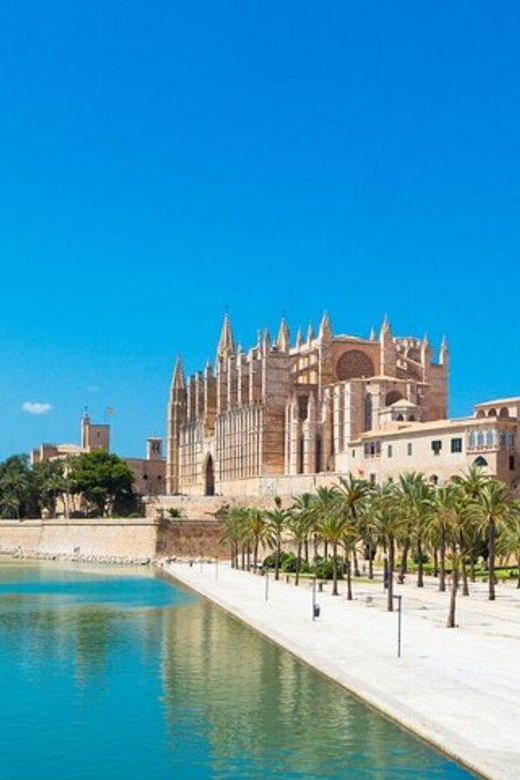
Not every tour includes a place like Ca’n Joan de s’Aigo (depending on the route your guide chooses). But when it appears, it’s the kind of stop that makes the walk feel more personal and local.
This is where you may get little cultural pointers that matter later in your day. One guide style that gets praise is the attention to traditional elements—like the Mallorcan fabric motif, and even the story of espadrilles and shoes. It’s the practical side of culture: you learn what you’re seeing in shops and streets.
If you like travel that teaches you how to spot details without a guide, this stop is a win.
Palau de l’Almudaina and Parc de la Mar: Power Meets Sea Air
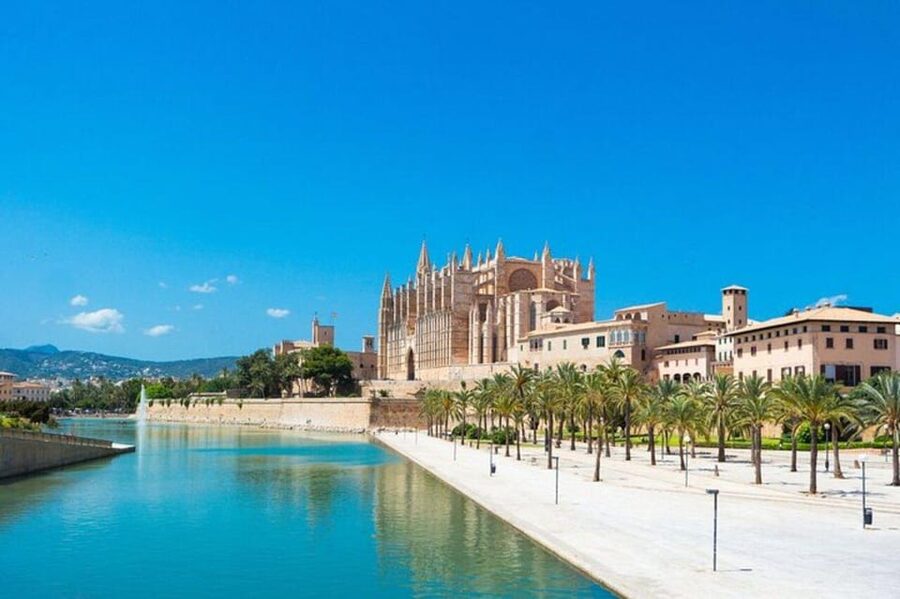
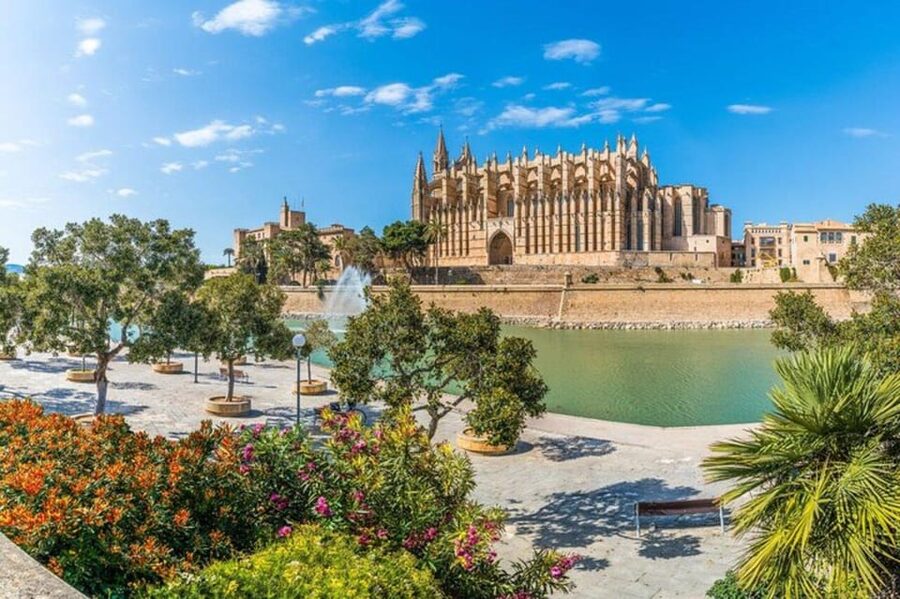
Palau de l’Almudaina is a classic Palma anchor. Even if you’re not going inside, the point of the stop is understanding what the building represents and how it ties into Palma’s long timeline.
Then you finish with Parc de la Mar, which shifts the atmosphere toward open air and sea views. This ending is smart because it gives your eyes a reset and a sense of what Palma looks like beyond the tight old streets.
If you’re planning what to do afterward, this is a helpful location. You’ll often find it easier to choose your next walk or meal when you’ve just been oriented to the waterfront area.
What You’ll Learn From the Guide (Beyond the Sights)
The tour is designed to be more than a route. The guide also gives you advice on what else to do in Palma, and that’s where the tour can pay off fast.
Guides like Frank are described as delivering an immersive sense of time through their history and skill at explaining connections. Jorge is praised for tailoring the route and adding extra context—like the Roman baths area with interior garden calm. Sylvie gets credit for sharing Palma’s secrets with passion.
Even if you don’t care about every historical detail, you’ll still walk away with a better sense of where to go next. That’s especially useful if you only have a single free evening or want to avoid aimless wandering.
Price and Value: Is $39 a Good Deal?
At $39 per person for a 2-hour private tour, the value depends on what you want from your time. If your goal is a quick, guided tour through major sites with local interpretation, it’s a strong deal.
Here’s why:
- You’re paying for a guide, not a crowd.
- The tour is customizable, so it can fit your interests rather than forcing you into topics you don’t care about.
- Walking plus public transport can help you cover more without draining yourself.
- The provider also offers help booking tickets for the visits you want to include.
So if you’re comparing to cheaper group tours, remember: group tours can still be great, but you give up control of pace and the ability to ask questions at the moment you think of them. In this format, that flexibility is the value.
Practical Tips for Getting the Most From Your Walk
Because this is a short tour, your personal prep matters. Wear comfortable shoes and keep your phone charged for photos and maps afterward.
Also, decide early what matters most to you. If you care about history and architecture, say it at the start and you’ll get a tighter match. If you care about cultural details and what to look for while shopping and walking later, the guide can steer the route in that direction too.
Finally, plan your day so you’re not rushing. When you’re rested, the explanations land better, and you’ll enjoy the squares and religious sites instead of just trying to “get through” them.
Languages, Pace, and Accessibility
The guide can work in English, French, Italian, German, and Spanish. That’s helpful if you want comfortable back-and-forth, not just one-way storytelling.
The pace is built for a 2-hour window. You’ll get multiple key stops, but this is still a walking tour—so expect to walk. The good news is the itinerary is designed to be efficient, and public transport is part of the plan unless you choose a different option.
For accessibility, the tour is listed as wheelchair accessible, which is worth noting if you need that support to enjoy the walk.
Should You Book This Palma Tour?
You should book if you want:
- a private, guide-led walk through Palma’s best-known core sights
- a route that can be tailored (history/architecture/cultural details)
- a finish with sea air so your day feels complete
You might skip it if:
- you need a longer deep-sight tour where you can linger at fewer stops
- you prefer fully independent sightseeing with no guide interpretation
- you’re trying to avoid any chance of extra ticket costs at certain stops
FAQ
How long is the walking tour in Palma de Mallorca?
The tour lasts 2 hours.
How much does the tour cost?
The price is listed as $39 per person.
Where does the tour start?
The starting location is Pg. del Born, 4.
Is this tour private?
Yes. It’s described as private and exclusive, meaning there won’t be anyone else in your group.
What languages are available for the live guide?
The guide is available in English, French, Italian, German, and Spanish.
What’s included, and is food included?
The tour includes a walking tour and public transport (except if you select one of the options), plus help from the team to book tickets for desired visits. Food and drinks are not included.
Palma on Foot, Continued
- Palma de Mallorca: City Walking Tour with The Cathedral
★ 4.0 · 657 reviews - Palma de Mallorca: Foodie Walking Tour of the Old Town
★ 4.6 · 372 reviews - Private walking tour in Palma de Mallorca with local guides.
★ 5.0 · 182 reviews - Palma, Cathedral & Valldemossa: Guided walking Tour
★ 4.1 · 182 reviews - Palma de Mallorca: Walking Tour, Cathedral & Local Tasting
★ 4.9 · 115 reviews - 2-Hour Private Walking Tour Through Palma’s Jewish Quarter
★ 5.0 · 66 reviews
More Mallorca Tours to Compare
- Palma de Mallorca: City Sightseeing Hop-On Hop-Off Bus Tour
★ 4.1 · 4,450 reviews - Mallorca: Island Tour with Boat, Tram & Train from the South
★ 4.4 · 3,888 reviews - Palma de Mallorca: Half-Day Catamaran Tour with Buffet Meal
★ 4.5 · 3,190 reviews - Palma de Mallorca: Sunset Boat Tour
★ 4.6 · 2,894 reviews - Mallorca: ATV /Quad Bike Tour
★ 4.8 · 2,712 reviews - Mallorca: Palma Boat Tour & Snorkeling with Drink Included
★ 4.4 · 2,444 reviews
More Mallorca Trips, Reviewed
- Palma: Cathedral of Mallorca Skip-the-Line Entry Ticket
★ 4.6 · 14,386 reviews - Palma de Mallorca: 5-Hour Catamaran Cruise with Lunch & Swim
★ 4.5 · 9,957 reviews - Porto Cristo: Caves of Hams Entry Ticket
★ 4.2 · 6,548 reviews - Palma de Mallorca: City Sightseeing Hop-On Hop-Off Bus Tour
★ 4.1 · 4,450 reviews - Mallorca: Island Tour with Boat, Tram & Train from the South
★ 4.4 · 3,888 reviews - Palma de Mallorca: Half-Day Catamaran Tour with Buffet Meal
★ 4.5 · 3,190 reviews
Just Reviewed: Fresh Mallorca Trips
Walking Tours, compared.
 ★ 4.0City Walking Tour with The CathedralFrom $34657 reviews
 ★ 4.6Foodie Walking Tour of the Old TownFrom $77372 reviews
 ★ 4.1Palma, Cathedral & Valldemossa: Guided walking TourFrom $40182 reviews
 ★ 5.0Private walking tour in Palma de Mallorca with local guides.From $266182 reviews
 ★ 4.9Walking Tour, Cathedral & Local TastingFrom $46115 reviews
 ★ 4.5Food Tasting Walking Tour in Palma with a LocalFrom $78105 reviews
 ★ 5.02-Hour Private Walking Tour Through Palma’s Jewish QuarterFrom $12066 reviews
 ★ 4.9Palma: Old Town Walking Tour & Cathedral Skip-the-LineFrom $5046 reviews
Browse the lists this tour appears in