Reviewed · MALLORCA
Secrets of Jewish Majorca – Half Day Experience
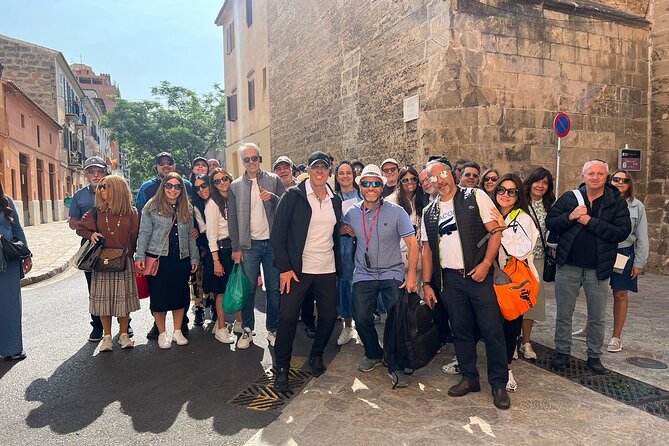
You can still feel centuries in Palma’s old streets. This half-day tour traces the Jewish presence in Mallorca through the Crypto-Jews story, the Xueta community, and the everyday clues left behind in shopfronts, signage, and even pastry traditions. I especially liked how the walk connects big, grim chapters like the Inquisition and forced conversions to what you can actually see on the ground today. I also liked the route mix: heritage sites plus a hands-on stop at Panaderia Fiol with a medieval oven.
One heads-up: a couple of specific “shop” details may not match what’s shown in the description anymore. If you’re going for a particular storefront or endpoint shop, I’d double-check the exact stop list with the operator when you confirm.
In This Review
- Quick snapshot: what you do in about 4 hours
- Key highlights I’d plan around
- The Jewish Quarter Interpretation Center: start with context, not confusion
- The secret ceramics workshop tunnel and the memorial stones
- Crypto-Jews and the Inquisition: why Palma’s story is different from generic “Jewish history”
- Xueta streets and the jewelry-shop clues you can still spot
- Why ensaimada becomes a history lesson (not just a pastry stop)
- Centre Maimó Ben Faraig Museum: a short stop with a focused purpose
- Panaderia Fiol and the 1652 oven: taste the proof
- How much is $259.29 worth for 4 hours?
- Who should book this half-day experience?
- What I’d do before you go
- Should you book Secrets of Jewish Majorca: Half Day Experience?
- FAQ
- How long is the Secrets of Jewish Majorca half-day experience?
- Where do I meet, and where does the tour end?
- Is this tour private or shared?
- What’s included in the price?
- What isn’t included during the tour?
- How do confirmation and refunds work?
Quick snapshot: what you do in about 4 hours
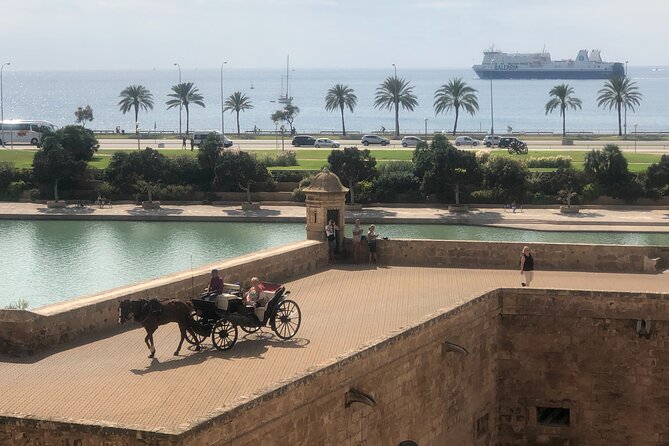
You’ll meet at Starbucks, Plaça de Cort, 1 in central Palma, then loop back to the same spot. Expect roughly 4 hours total, with a mobile ticket and admission covered for the main stops on the route. Coffee and snacks aren’t included, so plan to handle drinks on your own.
Key highlights I’d plan around
- Start in the Jewish Quarter Interpretation Center near the old Call entry point, so you get oriented fast
- A secret tunnel in a ceramics workshop that turns the walking tour into something more tangible
- Stopelsteins and memorial plaques tied to the Spanish Civil War era
- Centre Maimó Ben Faraig Museum as a short, focused culture stop
- Panaderia Fiol’s medieval oven (built in 1652) where food history meets community survival
- Xueta family streets where marks of a marginalized community still show up in today’s jewelry shops
Still deciding? Line it up against a few Mallorca favourites first.


The Jewish Quarter Interpretation Center: start with context, not confusion
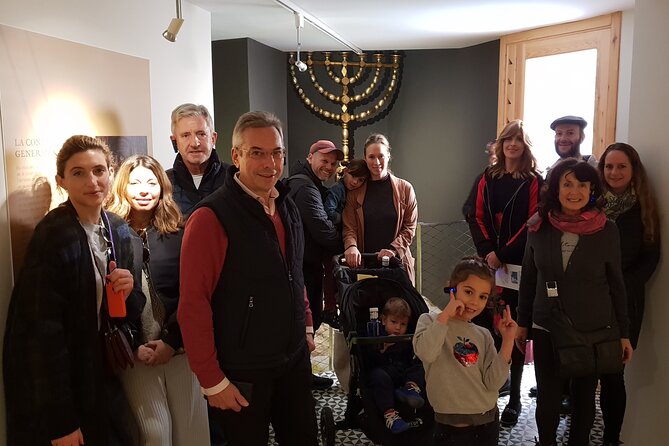
Most Jewish Quarter tours jump straight into streets. This one starts with a proper orientation point: the Jewish Quarter Interpretation Center, located near the entrance to the old Jewish Quarter area. If you’ve ever visited places like Catalan-speaking Jewish quarters in Barcelona or Valencia and seen the signs for Carrer de Call (Street of the Jewish Quarter), you’ll recognize the vibe immediately. The lesson here is that geography matters. When you understand what you’re looking for, the old city stops feeling like random lanes and starts feeling like a map of real lives.
I like that this stop sets the tone with the uncomfortable chapters. You’ll hear how the Inquisition and forced conversions reshaped religious identity in Spain, and how some people became Crypto-Jews—publicly Catholic, privately Jewish. It’s not just vocabulary. You get the idea behind the term: survival under pressure, faith held quietly when the rules were hostile.
The best payoff is that you’re not only hearing history. You’re learning what to notice next—street names, quiet memorials, and patterns in everyday commerce.
The secret ceramics workshop tunnel and the memorial stones
From the interpretation center, you move into the hidden layers of Palma’s old quarter. One standout moment is a walk into a secret tunnel inside a ceramics workshop. Even if you know the broad story of persecution and displacement, tunnels like this make it feel physical—like people once moved through their world with caution baked into the route.
Then comes a part that’s easy to miss if you’re touring on your own: the memorials. You’ll view memorial plaques or Stopelsteins connected to the Spanish Civil War. These aren’t “look and move on” decorations. They’re the city’s way of reminding you that 20th-century violence overlapped with older scars. The tour keeps steering you toward that overlap: religious persecution didn’t happen in a vacuum, and the consequences echo beyond the centuries where the headlines usually stop.
Practical tip: give yourself a moment before you enter the tunnel or stand near memorial markers. Look first, then listen. If your phone camera is on, pause it. The goal is to absorb what you’re seeing.
Crypto-Jews and the Inquisition: why Palma’s story is different from generic “Jewish history”
Here’s where the tour earns its name. Instead of focusing only on major “headline” events, it focuses on how ordinary people lived through pressure. You’ll learn about the Inquisition and forced conversions, and you’ll connect those events to the later emergence of Crypto-Jews—people who publicly professed Catholicism while privately maintaining Judaism.
That distinction matters for Palma’s streets. You’re not just looking for obvious religious buildings. You’re looking for the signs of a community that had to adapt its public face. That’s why the tour’s next phase—streets connected to the Xueta families—is so important.
The Xueta story is often described as a community that faced marginalization for generations. On this tour, you’ll visit specific streets where Xueta families lived for centuries, and you’ll hear that this lasted until as recently as the 1960s. That’s a surprisingly late end to discrimination. It changes how you interpret what you’re seeing now. Modern shops and family business patterns aren’t just “old-fashioned traditions.” They can be fingerprints of long-standing social limits.
- Palma: Cathedral of Mallorca Skip-the-Line Entry Ticket★ 4.6 · 14,386 reviews
- Palma de Mallorca: 5-Hour Catamaran Cruise with Lunch & Swim★ 4.5 · 9,957 reviews
- Porto Cristo: Caves of Hams Entry Ticket★ 4.2 · 6,548 reviews
- Palma de Mallorca: City Sightseeing Hop-On Hop-Off Bus Tour★ 4.1 · 4,450 reviews
- Mallorca: Island Tour with Boat, Tram & Train from the South★ 4.4 · 3,888 reviews
Xueta streets and the jewelry-shop clues you can still spot
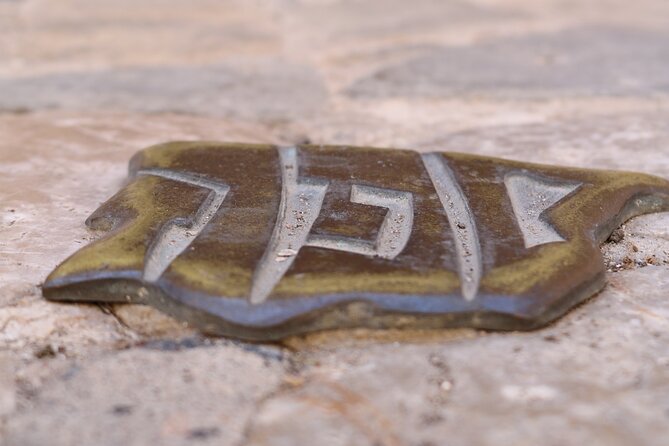
After you’ve got the historical framework, you walk into the everyday evidence. The tour takes you to streets tied to Xueta families and explains how signs of marginalization remain visible today. One of the most concrete examples is the jewelry trade: many jewelry shops have been kept within families for generations—so you’ll see how economic life and identity preservation can intertwine.
This is also where the tour gets slightly unusual in a good way. Instead of “museum only” learning, you get the real city texture. You’ll walk through a neighborhood where the past isn’t behind glass. It’s written into storefront ownership and the continuity of family names and businesses.
One thing to keep in mind: if you’re hoping for lots of big documentary-style displays, you might feel more street-based than exhibit-based. That’s not a flaw—it’s the point. Palma’s Jewish story shows up through urban patterns.
And yes, this is where the small caution matters. One recent experience reported that a referenced Jewish store endpoint mentioned in the description wasn’t there as expected. If a specific shop stop is important to you, I’d treat it as a “nice to see” rather than a guaranteed must-see, and I’d be ready to adapt if the route on the day differs.
Why ensaimada becomes a history lesson (not just a pastry stop)
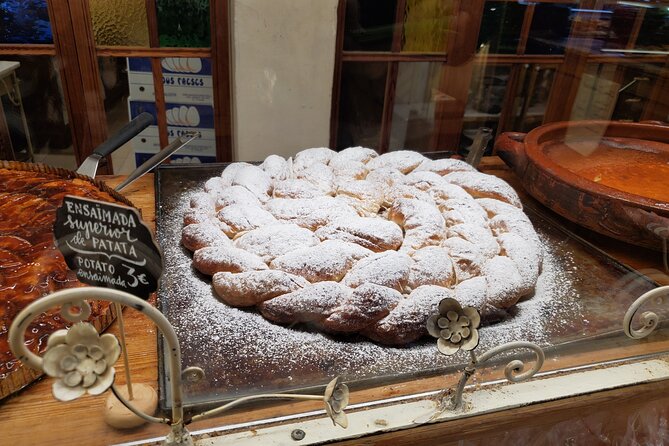
Food can look like a side note on tours. Here, it’s part of the evidence chain. You’ll hear how even Mallorca’s famous ensaimada can be connected to centuries-old prejudice and discrimination—specifically that it is cooked with pork fat as a reaction to restrictions and suspicion aimed at Jewish communities.
This isn’t presented like a trivia fact you can forget. It’s offered as a way to understand how communities respond when their choices are attacked from the outside. When people are forced into religious compromise or hiding, even what goes into food can reflect fear, adaptation, and survival.
Later, when you reach Panaderia Fiol, you’ll see how that idea becomes more tangible: a living bakery with older roots than you might expect.
Centre Maimó Ben Faraig Museum: a short stop with a focused purpose
Next up is the Centre Maimó Ben Faraig Museum, a shorter visit designed to keep momentum without turning the whole tour into a museum marathon. The time is about 30 minutes, so the goal isn’t to exhaust every gallery.
Instead, this stop gives you another angle on Jewish heritage in Palma—supporting what you heard on the streets with a concentrated cultural setting. If you like tours that don’t leave you with only stories and no grounding, this museum time helps you connect dots.
Practical note: since your stop here is short, take a quick look around and decide what to read carefully rather than trying to absorb everything. If you wander room to room for too long, you’ll miss the bigger picture the guide is building.
Panaderia Fiol and the 1652 oven: taste the proof
The final “feel it in your hands” stop is Panaderia Fiol, with a medieval oven built in 1652. It’s a perfect closing note because it brings you back to something concrete: crafts, techniques, and local tradition.
Even if you don’t buy anything, you’ll understand why this is worth including. A bakery is a place where recipes, tools, and routines get passed along. In a tour like this, that continuity is meaningful. You’re seeing how everyday life keeps moving even as identities, laws, and communities are being reshaped outside the shop.
Since coffee and snacks aren’t listed as included, this is where you can plan a small self-funded treat if you want one. If you do buy something, keep it light. You still have a walk back through the old-city lanes after.
How much is $259.29 worth for 4 hours?
At $259.29 per person, this isn’t a bargain-basement walking tour. But it also isn’t just generic sightseeing.
Here’s what pushes the value upward:
- Admission for the main stops is free on the schedule, so you’re not paying multiple separate entry fees
- The experience includes all fees and taxes, which keeps the total cost from surprising you later
- You get a focused thematic route—Crypto-Jews, forced conversions, Xueta streets, and memorial points—so the time is spent on meaning rather than random viewpoints
- It’s private for your group, which can make the cost feel more reasonable if you’re sharing with friends or family
- You’re on the ground in Palma for about 4 hours, a sweet spot for “serious topic, not all day lost”
Where the price can feel steep:
- If you expected a museum-heavy itinerary with lots of indoor time, this may feel more like a guided walk plus two short heritage stops
- If you mainly want food, you only get one focused bakery stop, not a full culinary program
- And as noted earlier, a specific shop detail may not always match what’s described, so don’t treat every storefront mention as guaranteed
If you’re paying this price, I’d go in with the right expectation: you’re buying a guided lens on Palma’s Jewish story, not a long list of major monuments.
Who should book this half-day experience?
This is a great fit if you:
- enjoy walking tours that connect events to specific streets
- want the Crypto-Jews and Xueta story explained in a way that helps you interpret what you see
- like small, targeted museum time rather than long gallery marathons
- care about how everyday culture (like pastry traditions) links to larger social pressure
It may not be ideal if you:
- want a mostly indoor tour with lots of exhibit time
- are planning around a strict “shop must be open and present” checklist
- prefer lighter, non-tragic themes only (this tour covers the Inquisition and forced conversions)
What I’d do before you go
To get the most out of 4 hours, I’d show up ready to listen. Wear comfortable shoes, because the charm of Palma is the tight lane walking. Also, bring water. Coffee and tea aren’t included, and you don’t want to start rationing energy midway through the walk.
Finally, if you’re traveling with curiosity and questions, this is the kind of tour where your questions will land well. The guide’s job is basically to translate the city into a story you can actually follow.
Should you book Secrets of Jewish Majorca: Half Day Experience?
If your goal is a guided, street-level understanding of Jewish life in Palma—especially the Crypto-Jews and Xueta communities—this is an excellent way to spend a half day. I’d book it if you like meaningful walking tours and want to see how history shows up in memorials, family businesses, and even food traditions.
I’d hesitate only if you’re depending on a specific storefront or endpoint detail to make your day. One recent experience flagged that certain shop references don’t always match reality anymore. Treat shop mentions as a bonus, and focus on the core route and the heritage interpretation.
FAQ
How long is the Secrets of Jewish Majorca half-day experience?
It runs for about 4 hours.
Where do I meet, and where does the tour end?
You meet at Starbucks, Plaça de Cort, 1, in central Palma. The activity ends back at the meeting point.
Is this tour private or shared?
It’s private for your group, so only your group participates.
What’s included in the price?
All fees and taxes are included, and the scheduled stops list admission as free.
What isn’t included during the tour?
Coffee and/or tea, breakfast, lunch, and snacks are not included.
How do confirmation and refunds work?
You’ll receive confirmation within 48 hours of booking (subject to availability). You can cancel up to 24 hours before the start time for a full refund. The experience requires good weather, and if it’s canceled due to poor weather, you’ll be offered a different date or a full refund.
More Mallorca Trips, Reviewed
- Palma: Cathedral of Mallorca Skip-the-Line Entry Ticket
★ 4.6 · 14,386 reviews - Palma de Mallorca: 5-Hour Catamaran Cruise with Lunch & Swim
★ 4.5 · 9,957 reviews - Porto Cristo: Caves of Hams Entry Ticket
★ 4.2 · 6,548 reviews - Palma de Mallorca: City Sightseeing Hop-On Hop-Off Bus Tour
★ 4.1 · 4,450 reviews - Mallorca: Island Tour with Boat, Tram & Train from the South
★ 4.4 · 3,888 reviews - Palma de Mallorca: Half-Day Catamaran Tour with Buffet Meal
★ 4.5 · 3,190 reviews