

Reviewed · SCUBA DIVING
Mallorca: Scuba Diving for Beginners
First breaths underwater change everything. In Mallorca’s Balearic Islands, this beginner scuba try-out gives you real practice fast: breathing through a regulator, using simple underwater hand signals, and learning how your body should feel when you’re in control. I love the small group setup (up to 10), which keeps the instructor close enough to correct you quickly, and I love that the training is built for total first-timers, not people who already know the basics. The main drawback is that it’s not for everyone health-wise, so you’ll want to read the restrictions carefully before you book.
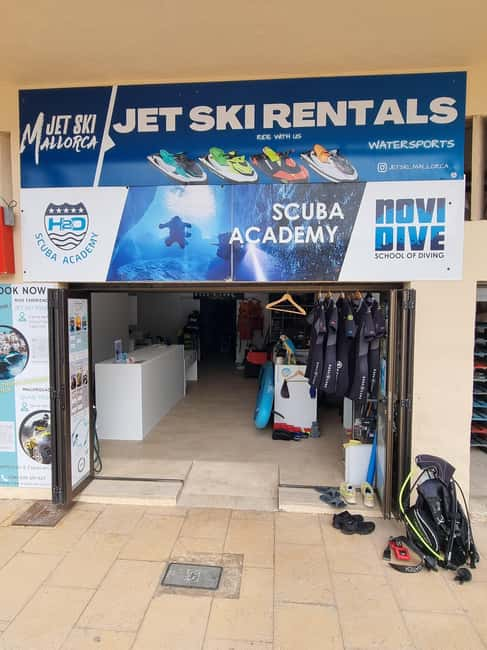
This is run through the SSI-style beginner program with a one-time experience format. It’s about learning core safety and comfort skills, not getting a full certification card. You’ll also get pickup from designated points in a white Renault Trafic with a scuba academy logo (or a Ford Ranger with the same branding), so you’re not piecing together transport on your own.
In This Review
- Key things that make this beginner scuba session work
- Why Mallorca is a smart choice for your first scuba try-out
- SSI beginner program: what the 3 hours is really for
- Gear check and getting comfortable fast
- Your first regulator breaths: what you’ll feel and what to expect
- Ear equalization and emptying your regulator: the basics that keep it safe
- Underwater communication signs: staying in sync with your instructor
- The reef experience: fish spotting and what to focus on as a beginner
- Small-group coaching and the H2O Scuba Academy setup
- Price and value: is $129 fair for a first-timer?
- What to bring, what to avoid, and who should think twice
- Timing with flights: the 18-hour rule
- Should you book this Mallorca beginner scuba session?
- FAQ
- FAQ
- How long is the beginner scuba experience in Mallorca?
- What is the price per person?
- Is pickup included?
- What scuba equipment is included?
- What languages do instructors speak?
- What are the age and health requirements?
- What should I bring, and is there anything I should not bring?
Key things that make this beginner scuba session work
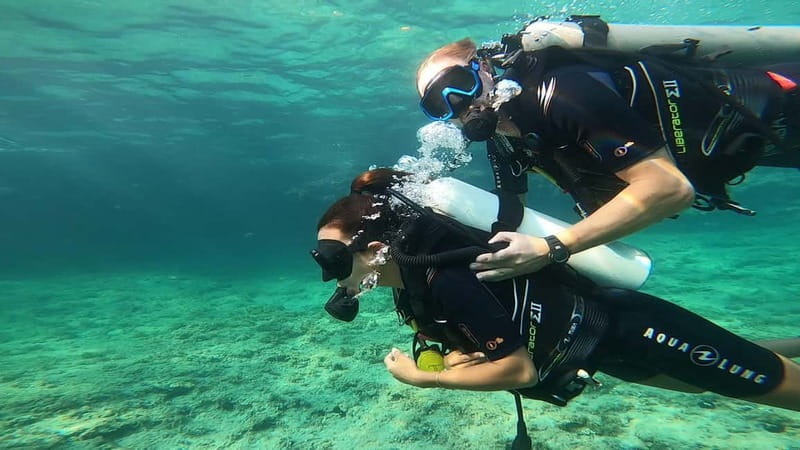
- SSI-style beginner format: you’re taught the essentials for a first underwater experience in controlled conditions
- All gear provided: mask, snorkel, fins, BCD, regulator, air tank, and a wetsuit if needed
- Instructor-led safety and signals: you learn basic rules and underwater communication signs early
- Practical skill drills: equalizing ear pressure and emptying your regulator underwater
- Small group attention: up to 10 participants means less waiting and more individual coaching
- Built-in transport: pickup vehicle includes the H2O Scuba Academy branding, so meeting is simple
Why Mallorca is a smart choice for your first scuba try-out
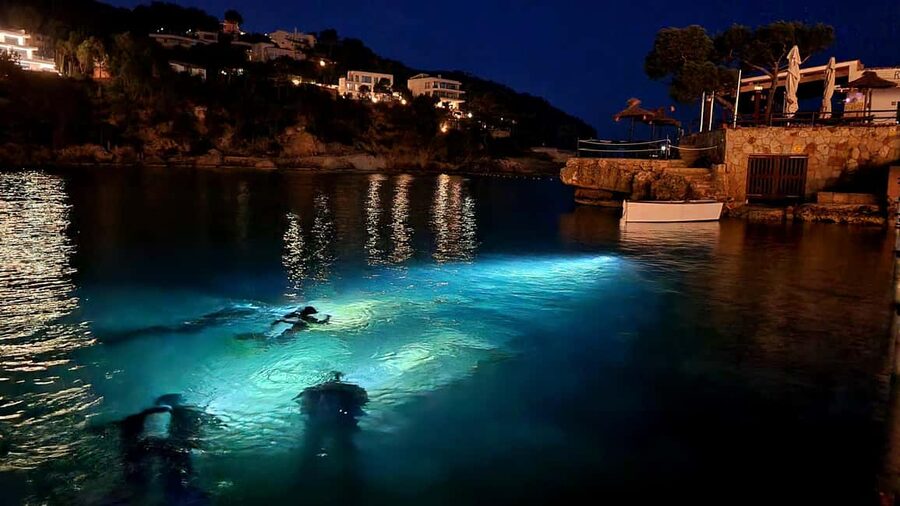
Mallorca is a solid place to start because it’s set up for easy, guided water activities. You get the benefit of a tourism base where staff and sites are used to bringing brand-new people into the water, and where the whole experience is designed around learning safely.
What I like for first-timers is that this session focuses on comfort and control, not speed or bravado. You’ll get time to understand how equipment works and then practice the basics step by step. That matters because the first time you put on a mask, clip in a regulator, and breathe underwater, your brain has to adjust fast. The only way that feels good is if your instructor sets you up with a calm plan and stays attentive.
Also, the program runs in English and Polish, which is helpful if you’re traveling with someone who prefers one of those languages. And with a small group capped at 10, you’re not lost in a crowd.
More time below the surface


SSI beginner program: what the 3 hours is really for
This is a one-time beginner experience through an SSI program structure. That’s a key detail. You’re getting the feel of scuba—breathing underwater, basic movement, and safety habits—without needing to commit to a full certification course.
In practice, your 3-hour timeline usually breaks down like this:
- Meet your instructor and go through the safety briefing.
- Learn how the gear works and how underwater communication works.
- Enter the water for your first regulator breaths and key skills.
- Do a guided first underwater session focused on comfort and basics.
You’ll learn basic communication signs used underwater, plus the safety rules you need to keep things predictable. For a beginner, predictability is everything. It reduces the mental load so you can focus on breathing and buoyancy instead of wondering what to do next.
The other thing I appreciate is that this is explicitly geared to people who have never tried scuba before. Your instructor isn’t teaching a class of mixed abilities; the format is designed around giving true beginners a starting point they can trust.
Gear check and getting comfortable fast
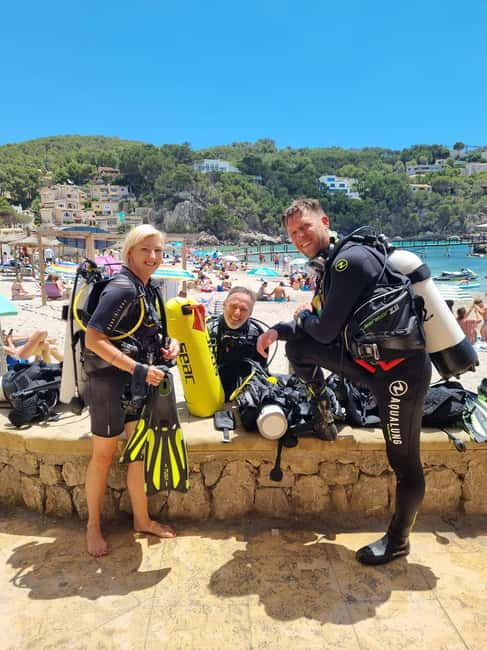
One of the best values in this session is that you don’t have to worry about equipment. You get basic diving gear included: a mask, snorkel, fins, buoyancy control device (BCD), regulator, air tank, and a wetsuit if needed.
Here’s what you should pay attention to when you’re fitting gear:
- Your mask fit should feel secure but not painfully tight. If water pressure or fogging becomes an issue, it’s better to fix it early than to struggle once you’re in the water.
- Fins should be comfortable enough that you can move without exhausting your legs.
- The BCD is your buoyancy tool. You’ll spend time learning how it helps you stay where you want to be.
You’ll also learn how to breathe using the regulator. That moment is the entire point of a try-out. Your first regulator breaths may feel strange at first, but the instructor’s job is to help you stay calm while your body adapts.
From the experience style, there’s a clear emphasis on getting you through the equipment steps in the right order. That’s how you avoid that beginner spiral of confusion, too-fast movement, and panic.
Your first regulator breaths: what you’ll feel and what to expect
The training is designed so you get a feel for breathing underwater without guessing. You’ll start with instruction on the regulator and then practice the basic motions your instructor wants you to use.
What surprised me in the best kind of beginner teaching is how much reassurance matters. Instructors tend to stay close so you don’t feel abandoned underwater. One review noted how being kept close created a strong sense of safety while still letting the diver feel like they were experiencing it personally, not just being handled.
For you, that translates into a simple mindset:
- Focus on breathing rhythm and comfort first.
- Follow the instructor’s hand signals.
- Don’t fight buoyancy. Work with it.
Also, don’t underestimate the mental shift from air breathing to regulator breathing. If you treat it like a breathing exercise rather than a performance test, the whole session usually feels smoother.
- Palma: Cathedral of Mallorca Skip-the-Line Entry Ticket★ 4.6 · 14,386 reviews
- Palma de Mallorca: 5-Hour Catamaran Cruise with Lunch & Swim★ 4.5 · 9,957 reviews
- Porto Cristo: Caves of Hams Entry Ticket★ 4.2 · 6,548 reviews
- Palma de Mallorca: City Sightseeing Hop-On Hop-Off Bus Tour★ 4.1 · 4,450 reviews
- Mallorca: Island Tour with Boat, Tram & Train from the South★ 4.4 · 3,888 reviews
Ear equalization and emptying your regulator: the basics that keep it safe
Two skill drills come up as major learning points: equalizing ear pressure and learning how to empty your regulator underwater.
Why these matter:
- Ear equalization is a skill, not a wish. Pressure changes happen during descent and you need a method you can do on cue.
- Emptying your regulator underwater helps you understand what to do if water enters the mouthpiece area, so it stops being scary.
If you go into the session thinking, I just have to survive the first minute, you’ll likely tense up. But if you approach it like, I’m practicing procedures, your mind stays steadier. That steadier mind helps you stay relaxed, and relaxed breathing usually makes buoyancy easier too.
This is the kind of training where a patient instructor makes a big difference. One review described the instructor as patient and attentive, helping whenever something wasn’t right. For a beginner, that’s not a small thing. It changes the entire experience from stressful to manageable.
Underwater communication signs: staying in sync with your instructor
You’ll learn basic underwater communication signs during the briefing portion. This is one of those parts that sounds simple until you’re actually underwater and your hands are holding gear and your view is limited by a mask.
The practical value: signs help you keep moving safely without shouting, without guessing, and without losing the “loop” between you and the instructor. Even for experienced swimmers, underwater communication is different because your breathing and buoyancy demand attention.
You’re also learning safety rules early, which means you should feel like there’s a plan and a set of expectations for what happens next. In a controlled beginner session, that structure is a big part of why it feels good.
The reef experience: fish spotting and what to focus on as a beginner
The best part of a first scuba try-out is the feeling of actually moving underwater and seeing life up close. In this session, you get to experience the underwater world around the reef and notice the variety of fish that show up during a short guided outing.
As a beginner, your job is not to “do it perfectly.” Your job is to watch what you can, breathe steadily, and stay with the instructor’s guidance. If you focus too hard on technique, you may miss the fun part: the moment you realize you can control your position and float in a way you can’t on land.
Here’s a trick that helps first-timers: pick two things to watch, not twenty. Fish and your own buoyancy cues are usually enough. Once you relax, everything else gets easier.
Small-group coaching and the H2O Scuba Academy setup

This experience is provided by H2O SCUBA ACADEMY S.L., and the whole structure is geared toward hands-on support. The group limit is 10 participants, which matters more than it sounds.
With 10 people or fewer:
- You spend less time waiting.
- Instructors can catch small mistakes early.
- You’re more likely to get individualized correction during the water practice.
Reviews also highlight the staff friendliness and how instructors stay attentive to reactions. One person mentioned the instructor being kind and helping whenever needed, which is what you want if you get nervous about equalization, regulator breathing, or staying calm underwater.
Pickup is included too. You’ll arrive in a white Renault Trafic with the academy logo (or another branded Ford Ranger). If you’ve ever wasted time trying to find the right van, you’ll appreciate that this is handled.
Price and value: is $129 fair for a first-timer?
At $129 per person for 3 hours, you’re not just paying for a short swim. You’re paying for:
- a professional instructor
- safety briefing and instruction
- underwater communication signs introduction
- first underwater practice experience
- basic diving equipment
- transport from designated points
For beginners, the equipment piece is a big value. Buying or renting gear later can add up, especially if you’re still figuring out what fits you well. Here, the session covers the basics and you learn what you actually like and what feels awkward.
Also, you’re getting a trained guide’s time during the parts that matter most: learning the regulator, handling ear pressure, and using buoyancy control. That’s where beginners usually need the most help.
The only “hidden cost” to consider is your preparation time and comfort. Bring the right items, and you’ll feel smoother from start to finish.
What to bring, what to avoid, and who should think twice
If you book this, you’ll want your kit ready. Bring:
- passport or ID card
- hat
- swimwear
- change of clothes
- towel
- snacks and something to drink
- sunscreen
- water
A smart beginner move is to bring snacks even if you think you won’t need them. You’re doing active training, and waiting around dry can make you feel hungry faster than you expect.
What’s not allowed: alcohol and drugs.
Now the important part: who this isn’t suitable for.
You should not join if you’re:
- under 10 years old
- pregnant
- have back problems
- have heart problems
- have respiratory issues
- have epilepsy
- have haemophilia
- have high blood pressure
- have had recent surgeries
Also, you should be in good health and comfortable in water. If any of those categories apply to you, double-check with the provider before you assume you’re fine.
For minors under 18, a legal guardian must be present to sign the form. And everyone must take a passport or ID card.
Timing with flights: the 18-hour rule
One timing note you should treat seriously: you should dive at least 18 hours before the flight. That’s the kind of rule travel days often ignore, but it’s included for a reason.
If you’re traveling in and out of Mallorca the same day as your session, plan a buffer. A smooth schedule makes you less stressed and more comfortable in the session itself.
Should you book this Mallorca beginner scuba session?
If you want a first experience that teaches real safety habits, uses a small group, and gives you hands-on practice with the regulator, this is a strong match. I like that you’re trained to handle core skills like ear equalization and emptying your regulator underwater, because those are exactly the points that separate fun-from-stress from fun-but-frantic.
You should also consider booking if you value guidance style. Reviews repeatedly point to instructors staying close, being patient, and helping quickly when something isn’t right. For a total beginner, that support can make the difference between a great memory and a stressful one.
Skip it if your health situation falls under the listed restrictions, or if you’re not comfortable in water. In those cases, it’s better to choose a different activity that fits you safely.
FAQ
FAQ
How long is the beginner scuba experience in Mallorca?
It lasts 3 hours. You can check availability for the starting times.
What is the price per person?
The price is $129 per person.
Is pickup included?
Yes. Transport from designated points is included. You’ll arrive in a white Renault Trafic with the H2O Scuba Academy logo or another Ford Ranger covered with the same logo.
What scuba equipment is included?
Basic equipment is included: a mask, snorkel, fins, buoyancy control device (BCD), regulator, air tank, and a wetsuit if needed.
What languages do instructors speak?
The instructor teaches in English and Polish.
What are the age and health requirements?
Participants must be at least 10 years old and in good health. It’s not suitable for pregnant women, people with back problems, heart problems, respiratory issues, epilepsy, haemophilia, or high blood pressure, or for those with recent surgeries.
What should I bring, and is there anything I should not bring?
Bring your passport or ID card, hat, swimwear, change of clothes, towel, snacks, sunscreen, and water. Alcohol and drugs are not allowed.
More Time Below the Surface
- Mallorca: Discover Scuba Diving for Beginners
★ 4.7 · 805 reviews - Santa Ponsa: Try Scuba Diving in a Marine Reserve
★ 4.9 · 172 reviews - Private Beginner Scuba experience in Mallorca
★ 5.0 · 117 reviews - Mallorca: Discover Scuba Diving from the boat
★ 5.0 · 95 reviews - Mallorca: Discover Scuba Diving from the beach
★ 5.0 · 87 reviews - Try Scuba Diving by Boat in Mallorca
★ 5.0 · 68 reviews
More Mallorca Trips, Reviewed
- Palma: Cathedral of Mallorca Skip-the-Line Entry Ticket
★ 4.6 · 14,386 reviews - Palma de Mallorca: 5-Hour Catamaran Cruise with Lunch & Swim
★ 4.5 · 9,957 reviews - Porto Cristo: Caves of Hams Entry Ticket
★ 4.2 · 6,548 reviews - Palma de Mallorca: City Sightseeing Hop-On Hop-Off Bus Tour
★ 4.1 · 4,450 reviews - Mallorca: Island Tour with Boat, Tram & Train from the South
★ 4.4 · 3,888 reviews - Palma de Mallorca: Half-Day Catamaran Tour with Buffet Meal
★ 4.5 · 3,190 reviews
Just Reviewed: Fresh Mallorca Trips



Scuba Diving, compared.
 ★ 4.7Discover Scuba Diving for BeginnersFrom $176805 reviews
 ★ 4.9Santa Ponsa: Try Scuba Diving in a Marine ReserveFrom $130172 reviews
Private Beginner Scuba experience in MallorcaFrom $306117 reviews
 ★ 5.0Discover Scuba Diving from the boatFrom $29095 reviews
 ★ 5.0Discover Scuba Diving from the beachFrom $12087 reviews
Try Scuba Diving by Boat in MallorcaFrom $13168 reviews
 ★ 4.5Try Scuba Diving in a Beautiful Nature ReserveFrom $19251 reviews
 ★ 4.6Snorkeling tour with diving instructor from a boat – Cap de FormentorFrom $6547 reviews
Browse the lists this tour appears in