
Reviewed · COASTEERING & CLIFF JUMPING
Mallorca: Coasteering North
Mallorca’s north coast is one of the easiest ways to get that wow factor fast. This coasteering session mixes sea jumps, sea-level climbing, an 8m abseil, and marine tunnels into one logical, guided circuit. Best of all, it’s built for groups—so you can push your comfort level without feeling like you’re on your own.
Two things I really like about this trip: you get multiple mini challenges in the same area (so the day doesn’t feel random), and the guides take safety seriously with high-quality gear. One consideration: it’s not for non-swimmers, and if the sea gets rough, the route can change or the activity may be canceled for safety.
In This Review
- Key things you’ll love on Coasteering North
- Coasteering North on Mallorca’s Alcúdia Cliffs: Why this format feels so good
- Meeting Point and timing: getting set up before you hit the water
- The main event: eight sea jumps that teach you heights fast
- A quick reality check
- DWS / psicobloc traverse: sea-level climbing without a rope
- If you want buoyancy support
- The 8-meter rappel and how it changes the pace
- Marine tunnels and the close-up rock-water world
- Safety gear and guides: what you should look for (and why it matters)
- Who should feel confident walking into this?
- Price and value: is $77 worth it for 3 hours of this stuff?
- What to bring (and what to remember about booties)
- Who this coasteering trip suits (and who should skip it)
- Should you book Coasteering North with MES Aventura?
- FAQ
- How long is Coasteering North?
- Where do I meet the guide?
- Do I need to know how to swim?
- What activities are included?
- What should I bring?
- What if sea conditions are unsafe?
Key things you’ll love on Coasteering North
- 8 sea entries with different jump heights (about 2 to 7 meters, with higher jumps possible for those who want them)
- DWS / psicobloc traverse at sea level without a rope (max about 2 meters above sea)
- An 8m rappel (abseil) plus options like a zip-line depending on conditions
- Marine tunnels and that close-up rock-and-water feel you can only get this way
- Small groups (up to 10), with instruction in English or Spanish
- Safety-first setup, including optional buoyancy aids like swim vests
Coasteering North on Mallorca’s Alcúdia Cliffs: Why this format feels so good
If Mallorca is on your bucket list, you’ll probably picture beaches, coves, and sea views. This trip does all that, but it adds movement and risk in a controlled way—so the coast feels like an adventure route, not a postcard. You’ll be out on the Alcúdia cliffs area, hopping between stations where the terrain and water create natural “rooms” for jumping, climbing, and rappelling.
What makes this format practical is the sequence. You start with easier entries and build comfort with heights. Then you go into sea-level climbing (psicobloc/DWS), where your focus is technique, balance, and staying calm. After that, the rappel and marine tunnels break up the adrenaline with something more exploratory and scenic.
The other thing worth noting: this is summer-season group fun, not a solo extreme mission. You can be brave, but you also get guided pacing. In the best groups, that difference is huge—because nerves are normal, especially when you’re stepping off a rock into clear water.
Scramble, leap and swim, more coasteering


Meeting Point and timing: getting set up before you hit the water
You meet at Carrer Fonoll, 8, at the parking area where your guide is there to find you. From there, you’ll be on the go for about three hours total, moving along the coast as you rotate through the different elements.
That three-hour window is a sweet spot. It’s long enough to feel like a real experience—multiple jumps, a rappel, and traverses—without turning into an all-day ordeal. You’ll also want to arrive ready to swim and move. Once you’re in wetsuit gear and on the rock, there isn’t much room for second-guessing.
Because the itinerary can shift for safety, I treat this like a plan for a circuit, not a rigid script. You’ll still get the big pieces (jumps, sea-level route work, and marine tunnel time), but your exact order or access points may change with the sea.
The main event: eight sea jumps that teach you heights fast
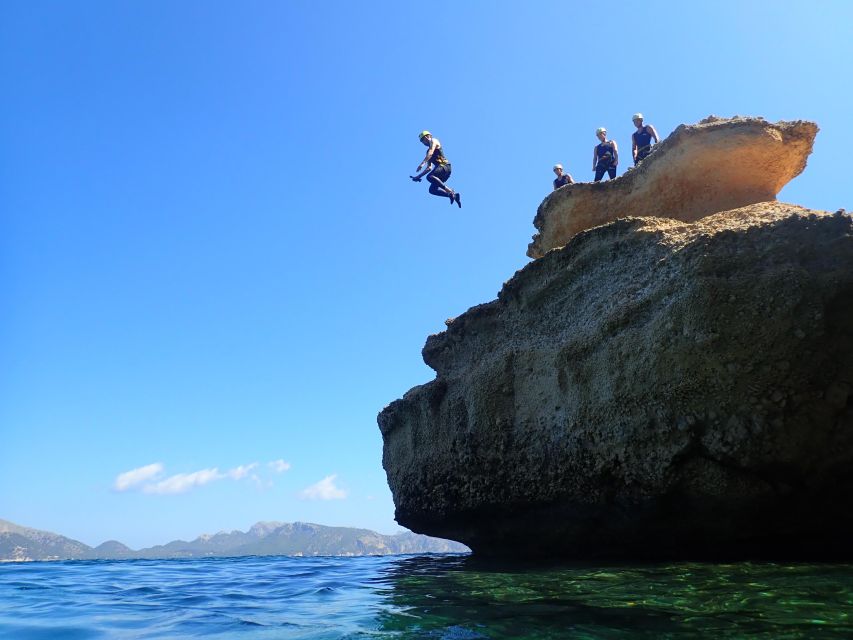
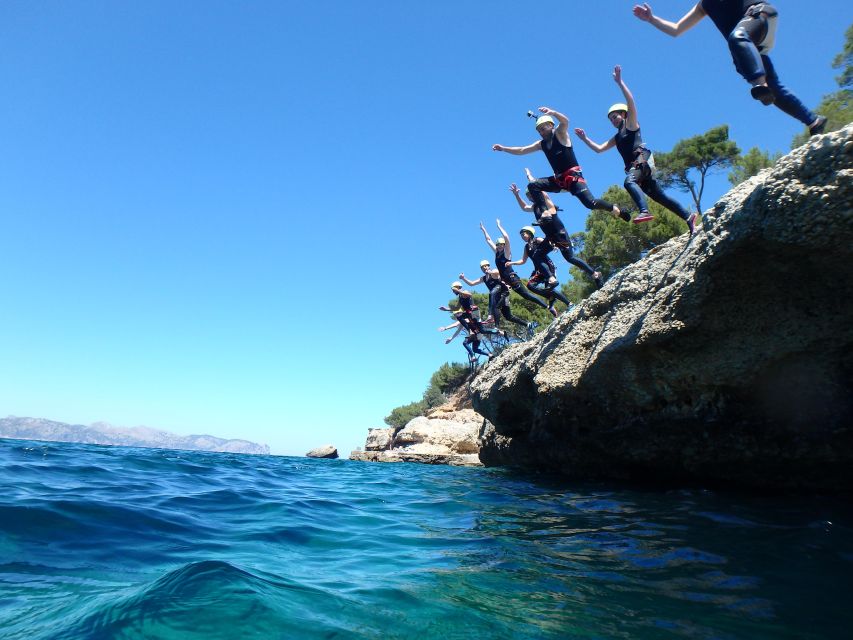
The headline of Coasteering North is the run of 8 jumps into the sea. The jump heights are different—roughly between 2 and 7 meters—so you aren’t thrown into the hardest part right away. The whole point is gradual adaptation: your brain learns what the water entry feels like, and your body learns how to control your posture.
If you’re the type who worries about getting hurt, this is where good coaching matters. In one group, the guide showed an optimal jump technique aimed at protecting the neck and lower back. That’s the real value of starting with lower jumps: you practice form before you dial up the height.
One detail that’s easy to miss: you’re not just jumping once and waiting. You jump, reset, listen, and repeat. That rhythm is what helps most people overcome hesitation. And if you’re feeling confident, the experience can include higher jumps for those who want that extra challenge—up to around 13 meters in one reported example.
A quick reality check
Even if you’re comfortable with water, jumping off a cliff can feel scary at first. If you tend to freeze when you’re nervous, you may want to mentally commit to taking one step at a time—there’s usually time to build courage before the taller ones.
- Palma: Cathedral of Mallorca Skip-the-Line Entry Ticket★ 4.6 · 14,386 reviews
- Palma de Mallorca: 5-Hour Catamaran Cruise with Lunch & Swim★ 4.5 · 9,957 reviews
- Porto Cristo: Caves of Hams Entry Ticket★ 4.2 · 6,548 reviews
- Palma de Mallorca: City Sightseeing Hop-On Hop-Off Bus Tour★ 4.1 · 4,450 reviews
- Mallorca: Island Tour with Boat, Tram & Train from the South★ 4.4 · 3,888 reviews
DWS / psicobloc traverse: sea-level climbing without a rope
After the jumping practice, you shift into DWS (Deep Water Soloing) and psicobloc. The basic idea: you climb rock without a rope, but you’re kept close to the sea. In this case, it’s described as climbing without a rope at a maximum of about 2 meters from sea level.
This section is less about big strength moves and more about staying composed. You’ll rely on foot placements, grip, and your ability to trust the setup. It’s also a different kind of adrenaline—less about height above water and more about controlled exposure while staying near it.
There’s a reason this works well in a group circuit. People who feel unsure can focus on learning the route step-by-step while the guide watches and guides the positioning. In one review, the guide was patient and encouraged participants without pushing anyone into the uncomfortable parts. That’s the tone you want here: coaching that helps you move safely.
If you want buoyancy support
One group noted there was an option to wear swim vests. That can matter if you feel floaty confidence is part of your comfort. If you’re unsure about how you’ll react when your feet leave stable ground, it’s worth asking what safety supports are available on the day.
The 8-meter rappel and how it changes the pace
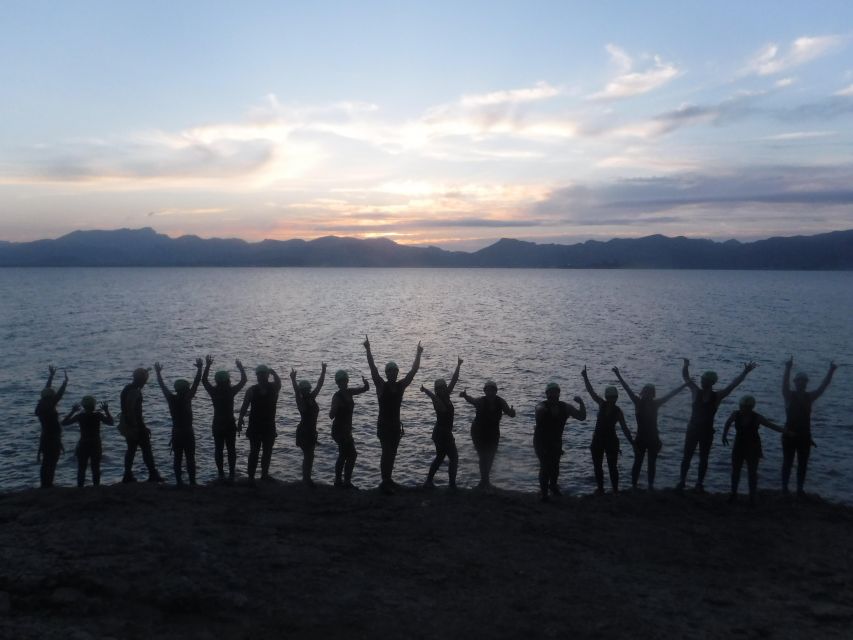
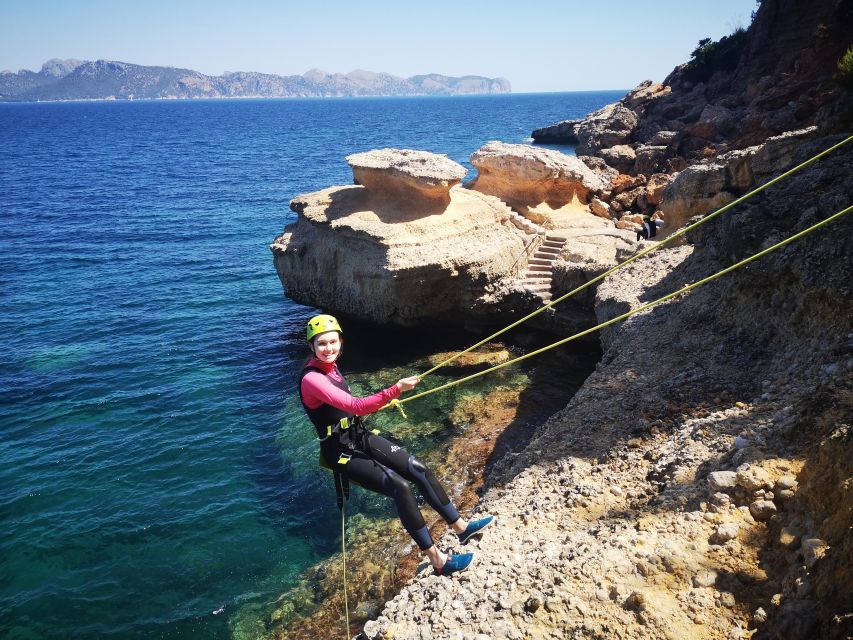
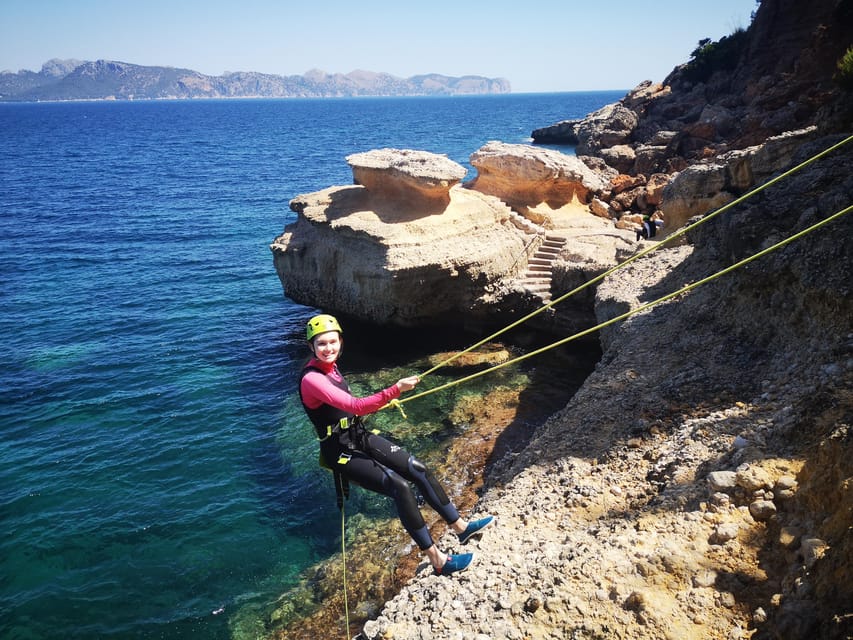
Then you move into abseiling about 8 meters. Rappelling turns the day from athletic chaos into calm control. Your job is simple: follow the rope system, keep your body positioned, and move steadily downward.
One practical tip from an experienced group: after rappelling down part of the face, there can be a chance to finish with a short jump into the sea. That helps break up the mental load—especially for people who prefer a quick finish after getting down safely.
Also, the experience is designed to be adjustable. If you’d rather not do abseiling, zip-line, or the higher jumps, you can skip those parts and the guide can adjust the circuit to you. That doesn’t mean it becomes a sightseeing walk—it just means you’re not forced into every element.
Marine tunnels and the close-up rock-water world
Between jumps, climbing sections, and rappels, you get marine tunnels and some stunning close-up coast scenery. This is where the north coast of Mallorca feels special: you’re in and around the rock, watching daylight shift through openings in the stone, with clear water below.
Marine tunnels also change the sensation of risk. Instead of only thinking about water entry, you’re moving through spaces with sound and texture—echoes, salt spray, and that cool feeling when you realize how near you are to water and rock at the same time.
One review highlighted the chance to swim into a cave, and it’s exactly the sort of moment that makes the day more than a checklist. It’s not just jumping for photos. It’s exploring the coastline as a system.
Safety gear and guides: what you should look for (and why it matters)
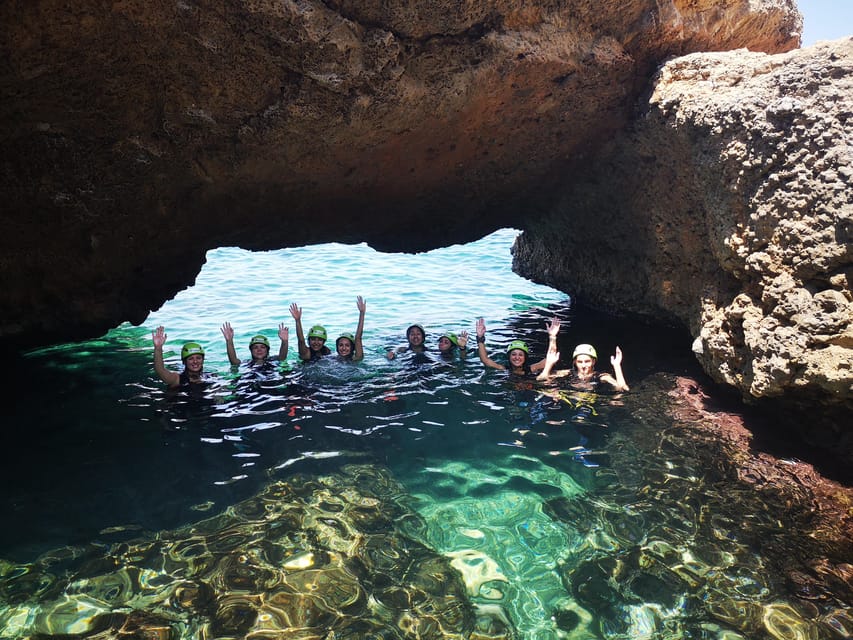
The activity is built around high-quality safety gear, and that’s not a throwaway line. Coasteering is one of those sports where confidence comes from preparation—good communication, correct technique, and equipment that actually fits the situation.
In multiple accounts, the vibe was patient and calm. Guides like Juanfran and Alfonso were described as supportive, clearly explaining steps in English, and helping people practice technique without embarrassment. Another guide, Dany, was praised for taking time to explain and for making nervous participants comfortable.
That’s the big thing to check when you compare companies: not just whether they say safety, but whether they teach you what to do. If you can understand the plan—where you’re stepping, how you’re jumping, how you’re moving between stations—your stress drops fast. You’ll still feel adrenaline, but it feels earned, not random.
Who should feel confident walking into this?
You don’t need previous climbing experience. But you do need to be able to swim, and you should be comfortable in open water conditions.
Price and value: is $77 worth it for 3 hours of this stuff?
At about $77 per person for roughly three hours, this isn’t a cheap add-on—but it also isn’t overpriced for what you’re getting. You’re paying for a guided circuit that stacks multiple technical elements in one place:
- 8 sea jumps across varying heights
- DWS / psicobloc sea-level traversing
- An 8-meter rappel
- Marine tunnel time
- Instruction and safety setup, with gear described as high-quality
If you try to cobble together separate activities—like a tour for cliffs, a separate abseiling lesson, and a standalone cave or tunnel experience—you’d quickly find the cost adds up. Here, the value is in the concentration: one location, one guide team, one safety workflow, and repeated learning moments.
In plain terms: if you want a day that feels active and distinct from beach time, this price can make sense. If you only want one single jump and a relaxed swim, you might decide to keep your money for something gentler.
What to bring (and what to remember about booties)
Bring:
- Swimwear
- Towel
- Sunscreen
- Water
And consider booties. It’s recommended to bring your own booties with a rubber sole if you can. If you can’t, the team will provide them.
This matters more than it sounds. On rocks, traction and foot protection are the difference between feeling secure and feeling like you’re constantly adjusting your balance. Saltwater plus slick rock can make even confident swimmers feel clumsy on land.
Also follow the simple rules: no alcohol or drugs, and don’t litter. Coastal rock areas can get fragile, and clean practices are part of being a good visitor.
Who this coasteering trip suits (and who should skip it)
This experience is described as not suitable for:
- Pregnant women
- Non-swimmers
That’s the clearest boundary. Beyond that, it suits people who:
- want a guided adrenaline circuit without needing climbing background
- can handle ocean entry and shifting sea conditions
- enjoy learning technique, not just doing stunts
If you’re afraid of heights, you may still be able to participate—since you can often skip some elements, and the jumps are staged. But you should be honest with yourself about whether you can trust the guide and commit to the steps.
One more key consideration: sea conditions can change access to caves. If access becomes unsafe, the guide may adjust the schedule or modify the route, and no refunds are issued in that case. That doesn’t mean it’s unreliable. It means you’re doing an ocean sport, and nature decides the details.
Should you book Coasteering North with MES Aventura?
Book it if you want one 3-hour Mallorca adventure that blends technique, sea views, and multiple cliff-and-water challenges, with instruction that focuses on comfort and safety. The small group size (up to 10) is a plus if you want attention and a calmer pace.
Pass or choose something else if you’re a non-swimmer, you’re pregnant, or you know you’d panic at the idea of jumping into open water. Also, if you hate adapting to weather or sea conditions, keep in mind the route may shift or be canceled for safety.
If you like active days, clear instructions, and the idea of earning your adrenaline step-by-step, Coasteering North is a strong pick.
FAQ
How long is Coasteering North?
The experience lasts about 3 hours.
Where do I meet the guide?
Meet at the parking area at Carrer Fonoll, 8, where your guide will be there.
Do I need to know how to swim?
Yes. Non-swimmers are not suitable for this activity.
What activities are included?
You can expect 8 jumps into the sea (with different heights), a DWS/psicobloc traverse, an abseil about 8 meters, and marine tunnels.
What should I bring?
Bring swimwear, a towel, sunscreen, and water. Booties with rubber soles are recommended; if you can’t bring them, they can provide them.
What if sea conditions are unsafe?
If conditions make access unsafe, the guide may adjust the schedule or modify the route. In that case, no refunds are issued.
More Mallorca Trips, Reviewed
- Palma: Cathedral of Mallorca Skip-the-Line Entry Ticket
★ 4.6 · 14,386 reviews - Palma de Mallorca: 5-Hour Catamaran Cruise with Lunch & Swim
★ 4.5 · 9,957 reviews - Porto Cristo: Caves of Hams Entry Ticket
★ 4.2 · 6,548 reviews - Palma de Mallorca: City Sightseeing Hop-On Hop-Off Bus Tour
★ 4.1 · 4,450 reviews - Mallorca: Island Tour with Boat, Tram & Train from the South
★ 4.4 · 3,888 reviews - Palma de Mallorca: Half-Day Catamaran Tour with Buffet Meal
★ 4.5 · 3,190 reviews
Cliffs, Leaps and Swims
- Mallorca: Kayaking, Sea Cave, Cliff Jumping & Snorkel Tour
★ 4.8 · 1,447 reviews - Mallorca: Kayaking, Sea Cave, Cliff Jumping & Snorkel Tour
★ 5.0 · 769 reviews - Mallorca: Half-Day Coasteering Experience
★ 4.7 · 447 reviews - Estany d’en Mas: Coastal Hike, Abseil & Sea Cave Exploration
★ 4.9 · 162 reviews - Kayak Tour with Caves, Snorkeling and Picnic (+ Cliff Jump)
★ 5.0 · 118 reviews - Small-Group Cliff Jumping Experience in Mallorca
★ 5.0 · 84 reviews
Just Reviewed: Fresh Mallorca Trips

Coasteering & Cliff Jumping, compared.
 ★ 4.8Kayaking, Sea Cave, Cliff Jumping & Snorkel TourFrom $801,447 reviews
★ 5.0Kayaking, Sea Cave, Cliff Jumping & Snorkel TourFrom $83769 reviews
 ★ 4.7Half-Day Coasteering ExperienceFrom $88447 reviews
 ★ 4.9Estany d’en Mas: Coastal Hike, Abseil & Sea Cave ExplorationFrom $88162 reviews
 ★ 5.0Kayak Tour with Caves, Snorkeling and Picnic (+ Cliff Jump)From $83118 reviews
 ★ 5.0Small-Group Cliff Jumping Experience in MallorcaFrom $9084 reviews
 ★ 4.94-Hour Cliff Jumping AdventureFrom $8856 reviews
 ★ 5.0Coasteering in South Mallorca with TransfersFrom $9055 reviews
Browse the lists this tour appears in