
Reviewed · COASTEERING & CLIFF JUMPING
Mallorca: Beginner Canyoning -Level I
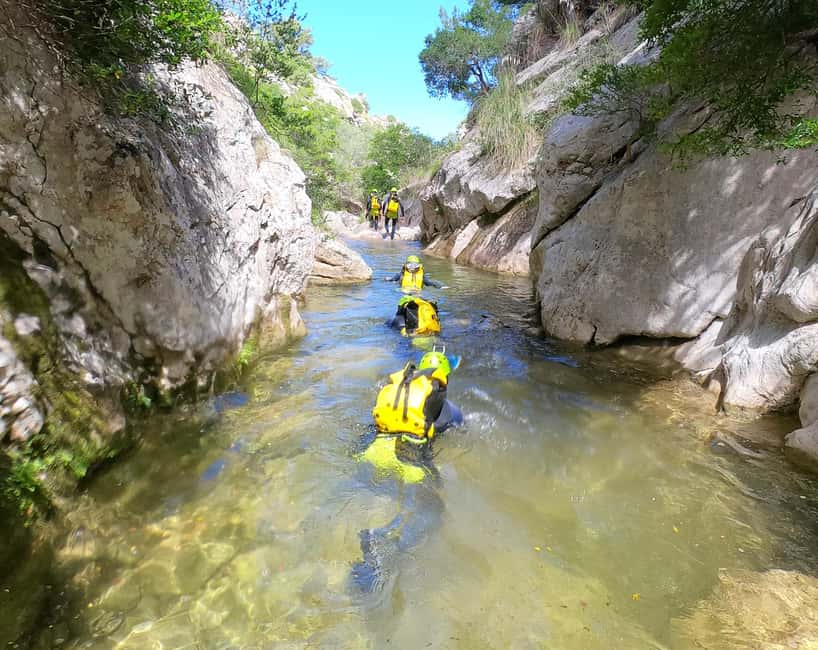
Canyoning in Mallorca is pure adrenaline. In Na Mora, you get the real canyoning stuff—natural slides, short abseils, and swims—set in the Tramuntana Mountains. I love how beginner-friendly it feels with technique tailored to your comfort, and I also like that the route stays scenic from the first uphill steps. The main catch: this can be tiring, so you’ll want a solid baseline fitness level.
What makes this trip stand out for me is the balance. It’s not just thrill for thrill’s sake; you’re still moving through a natural canyon system with real water features—pools, small waterfalls, and shaded corridors—while your guide keeps things controlled. One consideration is that it’s active outdoors in mountain terrain, so you should take the requirements seriously if you have limits with exertion or balance.
You’ll spend about 6 hours total, and the small-group setup (up to 10 people) makes instruction feel personal without turning the day into a production. If you’re hoping for an intro that mixes fun with safety, this one fits well.
In This Review
- Key things to know before you go
- Na Mora Canyoning: What Makes This Beginner Route Special
- From Sóller Valley to the Canyon Door: The Pine-Forest Approach Hike
- Inside the Canyon: Slides, Short Abseils, and Optional Jumps
- Natural slides that land in turquoise pools
- Abseils up to 8 meters with real instruction
- Optional jumps into deep basins
- Swim Sections and Shaded Water Corridors: Where You Regroup
- The Finish at Na Mora Torrent Mouth: Mountain Water Meets the Sea
- How Hard Is It Really? Safety, Fitness, and Who This Fits
- Guide Quality and Small-Group Feel (Including Nicky)
- Gear, Included Stuff, and What You Should Bring
- Timing, Season, and Logistics That Actually Affect Your Day
- Price and Value: Is $88 Worth It?
- Should You Book Beginner Canyoning in Na Mora?
- FAQ
- FAQ
- How long is the Mallorca Beginner Canyoning Level I experience?
- Where does this canyoning take place?
- What is the minimum age for this activity?
- What’s included in the price?
- Do I need to bring my own wetsuit or ropes?
- What should I bring with me?
- Are there abseils or rappels?
- Are jumps part of the route?
- What languages are the guides available in?
- When does the season run?
Key things to know before you go
- Beginner-focused canyoning (Level I) with techniques adjusted to your comfort
- Natural slides into turquoise pools that feel wild but not overwhelming
- Short abseils up to 8 meters with full guidance from your instructor
- Shaded water corridors and swim sections that give you a breather between moves
- A 30–40 minute approach hike through a pine forest with the canyon sounds leading the way
- Small group size (max 10) so you’re not just watching from the back
Na Mora Canyoning: What Makes This Beginner Route Special
Na Mora canyoning in Mallorca is built for people who want the canyon experience without needing advanced skills. You’re not tackling huge vertical walls. Instead, you get a sequence of manageable challenges—slides, rappels, and swimming—so you can learn by doing.
The setting matters, too. This isn’t a generic adventure park route. The canyon runs through limestone and narrow gorges, and as you move downstream the character changes from tighter, rock-hugging sections to more open, brighter areas. You also finish where the Na Mora torrent meets the Mediterranean, which makes the whole day feel like a real journey rather than a collection of stunts.
One more thing I like: the experience is designed to keep you moving. Even when there’s time to catch your breath, it’s not long idle waiting. You keep progressing through pools, corridors, and short water crossings, which tends to make the day feel smoother.
Scramble, leap and swim, more coasteering


From Sóller Valley to the Canyon Door: The Pine-Forest Approach Hike
Your day starts in the Sóller Valley area, in a landscape of olive groves and rugged limestone peaks. After a short briefing and gear check, you head out on a gentle 30–40 minute approach hike through a pine forest. This is one of those underrated parts of the trip because it sets your expectations.
On the trail, you’re listening for water before you even reach the canyon entrance. That helps you mentally switch from walking mode to canyoning mode. It also gives your body a warm-up without turning the day into a fitness test.
Bring practical shoes you can trust. The walk isn’t described as extreme, but you’re in mountain terrain and you’ll want grip and comfort for the transition into wet rock later. If you’re the type who hates feeling rushed, this approach hike is a nice buffer that lets you settle in before the first big splash.
Inside the Canyon: Slides, Short Abseils, and Optional Jumps
Once you’re in Na Mora, the canyon takes over. Over the next few hours, you descend through natural features—pools, small waterfalls, and narrow sections carved by centuries of flowing water. The pace stays active, and the fun comes in different forms rather than repeating one trick over and over.
Natural slides that land in turquoise pools
A highlight is the natural slides. These are part of the canyon itself, so instead of stepping onto a man-made platform, you’re using the rock’s natural shape. You slide down and splash into clear pools, which feels instantly satisfying because you don’t need extra imagination—you can see exactly where you’re going.
- Palma: Cathedral of Mallorca Skip-the-Line Entry Ticket★ 4.6 · 14,386 reviews
- Palma de Mallorca: 5-Hour Catamaran Cruise with Lunch & Swim★ 4.5 · 9,957 reviews
- Porto Cristo: Caves of Hams Entry Ticket★ 4.2 · 6,548 reviews
- Palma de Mallorca: City Sightseeing Hop-On Hop-Off Bus Tour★ 4.1 · 4,450 reviews
- Mallorca: Island Tour with Boat, Tram & Train from the South★ 4.4 · 3,888 reviews
Abseils up to 8 meters with real instruction
Then come the abseils (rappels). The route includes short ones, up to 8 meters, and the key word is guidance. Your instructor is there to help you handle ropes and positioning safely, which matters a lot if you’re new to this. You’ll be learning technique, not just performing.
Optional jumps into deep basins
There are also easy jumps offered as an option. They’re into deep, crystal-clear basins, and the word optional is important. You can choose the level of adrenaline you’re comfortable with, and you still get the canyon progression either way.
This mix is what makes the day feel like true beginner canyoning. You get variety without being forced into the scariest skill immediately.
Swim Sections and Shaded Water Corridors: Where You Regroup
Not every exciting moment looks like a slide or a rappel. A big part of Na Mora is the water you move through between obstacles: swims through shaded corridors and calmer pool sections that let you reset.
Those swim stretches can feel like a gift if you’ve been gripping onto excitement. They reduce the constant stop-start of scrambling and give you a chance to breathe, shake out your arms, and get comfortable in the water again. You’re still in the canyon, though, so you’re not leaving the action behind.
As you move deeper, the canyon narrows and widens in stages. The upper sections can feel more enclosed, with darker walls and narrow passages. Near the end, the route opens up and more sunlight reaches the rock. That shift changes the mood of the experience, and it’s one reason the day doesn’t feel repetitive.
The Finish at Na Mora Torrent Mouth: Mountain Water Meets the Sea
The descent finishes at the Na Mora torrent mouth, where fresh mountain water meets the Mediterranean. That final transition is more satisfying than it sounds. It turns your last minutes into a real closing scene: you’re leaving the canyon system and entering a coastal endpoint.
After that, there’s a short coastal walk back toward the meeting area. It’s not described as long, but it helps you shift from wet-water effort to dry-travel mode without feeling abruptly done. You’ll have time to breathe, regroup, and share what you managed to do—slides, rappels, and whatever optional jumps you picked.
How Hard Is It Really? Safety, Fitness, and Who This Fits
This is marketed as Beginner Canyoning – Level I, and that matters. The techniques are adapted to your comfort level, and you’re not thrown in with advanced expectations. Still, you should treat it as an active outdoors activity.
In the feedback I’ve seen reflected in the experience, people love the adventure but also warn not to underestimate the effort. Canyoning uses muscles you don’t always think about—gripping with your hands during rope moves, steady leg work on wet rock, and swimming that can add up.
Here’s who should take extra caution or skip it, based on the activity’s restrictions:
- Not suitable for children under 10 years
- Not suitable for pregnant women
- Not suitable for people with back problems
- Not suitable for mobility impairments
- Not suitable for heart problems
- Not suitable if you have vertigo
Also, you’ll need a suitable physical condition in general. If you’re generally active, you’ll likely do fine. If you’re dealing with balance issues or you know you get lightheaded easily, this is not a good risk.
Guide Quality and Small-Group Feel (Including Nicky)
One of the strongest parts of the experience is the human side. You get a professional local guide, and the small group size (limited to 10 participants) means instruction can be more hands-on. That matters with ropes, positioning, and pacing.
English, Spanish, and German are available, so you should be able to get clear explanations in the language you’re comfortable with. If your group is guided by Nicky, you can expect a calm, professional approach that focuses on taking care of everyone and not leaving anyone behind.
Even the included photos and videos help you relive the moments without needing to hold a device while you’re busy being soaked and busy being brave.
Gear, Included Stuff, and What You Should Bring
You don’t need to bring the technical gear. The trip includes all the essentials:
- harness
- helmet
- wetsuit
- ropes
- professional guidance through the experience
- accident coverage
- photos and videos
That’s a big value point. Good canyoning gear isn’t cheap, and it’s also not something most people want to hunt down right before a trip.
What you should bring is simple, practical, and easy to pack:
- comfortable shoes
- swimwear
- towel
- sunscreen
- water
I’d also suggest you pick swimwear you won’t mind getting stretched or splashed. You want gear that stays comfortable through wet movement and changing conditions in and out of pools.
Timing, Season, and Logistics That Actually Affect Your Day
This activity runs in the Tramuntana Mountains from October to May. That seasonal window is important because it tells you what kind of weather rhythm to expect. Mountain conditions can shift, and canyoning is strongly about being appropriately dressed and ready for water time.
The duration is about 6 hours, including briefing, the approach hike, the descent, and the walk back. You’ll want to plan your day so you’re not rushing into dinner reservations or tight connections immediately after.
Transportation to the meeting point isn’t included, so you’ll need to handle getting there on your own. The good news is you’re not spending energy all day on long shuttles; the main event is the canyon itself.
Price and Value: Is $88 Worth It?
At $88 per person, this can look like a bargain or a splurge, depending on how you compare it. Here’s what makes the price feel justified: you’re getting expert instruction, technical equipment, accident coverage, and photos/videos. For canyoning, those pieces add up fast if you were pricing them separately.
It also helps that the group is capped at 10 people. Smaller groups often mean better attention during the rope and safety moments. That’s not a luxury detail. It’s part of what makes beginner canyoning work.
So yes, it’s a solid value if you want a guided intro with real canyon features, not a watered-down experience. If you’re looking for something fully relaxing, though, remember that this day is physical and wet.
Should You Book Beginner Canyoning in Na Mora?
Book it if you want a true first canyoning experience with slides, abseils up to 8 meters, optional jumps, and swim sections in a dramatic mountain setting. It’s a strong choice for first-timers because the techniques are adjusted to your comfort level and the group stays small.
Skip it if you’re dealing with any of the listed medical or mobility concerns (especially vertigo, heart issues, or back problems), or if you know you struggle with sustained active movement on uneven wet terrain. Also, if the idea of rope work makes you tense, treat this as a learn-by-doing day, not a casual stroll.
If you’re the kind of traveler who likes experiences that mix nature and skills, Na Mora is a great fit. You’ll come away feeling like you did something real, not just watched it happen.
FAQ
FAQ
How long is the Mallorca Beginner Canyoning Level I experience?
The experience lasts 6 hours.
Where does this canyoning take place?
It takes place in the Tramuntana Mountains in Mallorca, Spain, at Na Mora Canyon.
What is the minimum age for this activity?
The minimum age is 10 years.
What’s included in the price?
The price includes a professional local guide, all technical equipment (harness, helmet, wetsuit, ropes), guided canyoning, accident coverage, and photos and videos.
Do I need to bring my own wetsuit or ropes?
No. All technical equipment is provided.
What should I bring with me?
You should bring comfortable shoes, swimwear, a towel, sunscreen, and water.
Are there abseils or rappels?
Yes. There are short abseils (rappels) of up to 8 meters, with full guidance from your instructor.
Are jumps part of the route?
Easy jumps are optional into deep crystal basins.
What languages are the guides available in?
The live tour guide is available in English, Spanish, and German.
When does the season run?
The season runs from October to May.
More Mallorca Trips, Reviewed
- Palma: Cathedral of Mallorca Skip-the-Line Entry Ticket
★ 4.6 · 14,386 reviews - Palma de Mallorca: 5-Hour Catamaran Cruise with Lunch & Swim
★ 4.5 · 9,957 reviews - Porto Cristo: Caves of Hams Entry Ticket
★ 4.2 · 6,548 reviews - Palma de Mallorca: City Sightseeing Hop-On Hop-Off Bus Tour
★ 4.1 · 4,450 reviews - Mallorca: Island Tour with Boat, Tram & Train from the South
★ 4.4 · 3,888 reviews - Palma de Mallorca: Half-Day Catamaran Tour with Buffet Meal
★ 4.5 · 3,190 reviews
Cliffs, Leaps and Swims
- Mallorca: Kayaking, Sea Cave, Cliff Jumping & Snorkel Tour
★ 4.8 · 1,447 reviews - Mallorca: Kayaking, Sea Cave, Cliff Jumping & Snorkel Tour
★ 5.0 · 769 reviews - Mallorca: Half-Day Coasteering Experience
★ 4.7 · 447 reviews - Estany d’en Mas: Coastal Hike, Abseil & Sea Cave Exploration
★ 4.9 · 162 reviews - Kayak Tour with Caves, Snorkeling and Picnic (+ Cliff Jump)
★ 5.0 · 118 reviews - Small-Group Cliff Jumping Experience in Mallorca
★ 5.0 · 84 reviews
Just Reviewed: Fresh Mallorca Trips
Coasteering & Cliff Jumping, compared.
 ★ 4.8Kayaking, Sea Cave, Cliff Jumping & Snorkel TourFrom $801,447 reviews
★ 5.0Kayaking, Sea Cave, Cliff Jumping & Snorkel TourFrom $83769 reviews
 ★ 4.7Half-Day Coasteering ExperienceFrom $88447 reviews
 ★ 4.9Estany d’en Mas: Coastal Hike, Abseil & Sea Cave ExplorationFrom $88162 reviews
 ★ 5.0Kayak Tour with Caves, Snorkeling and Picnic (+ Cliff Jump)From $83118 reviews
 ★ 5.0Small-Group Cliff Jumping Experience in MallorcaFrom $9084 reviews
 ★ 4.94-Hour Cliff Jumping AdventureFrom $8856 reviews
 ★ 5.0Coasteering in South Mallorca with TransfersFrom $9055 reviews
Browse the lists this tour appears in